Two decades before Billie Jean King beat Bobby Riggs in a tennis match dubbed the Battle of the Sexes with 90 million people watching on television, a tiny but formidable cowgirl had already dominated her own South Texas calf roping version of the classic competition.
Unlike King, Wanda Harper Bush wasn’t competing to prove women could, nor that they deserved equal pay and consideration as athletes, though she certainly accomplished those things in her long career, both inside the arena and as a board member of the Girls Rodeo Association (GRA), now the Women’s Professional Rodeo Association (WPRA).
In the 1950s Bush was just a cowgirl who loved to rope and found a means to use her passion and skill to help her family, spinning male egos into money-earning opportunities via match ropings.
Expertise Is the By-Product of Necessity
Born on the Harper Ranch of Mason, Texas, in 1931, Bush grew up helping with ranching chores, tending the family’s cattle, goats and sheep as they persevered through drought years during World War II. In the saddle practically from birth, she rode her horse 3 miles to the main road to catch the school bus each day.
Her father, Alvin, was an outstanding horseman who enjoyed competing when ranch life allowed, and he passed that enthusiasm on to his daughter.
“She loved to rope,” Bush’s own daughter, Shanna, said of her mother.
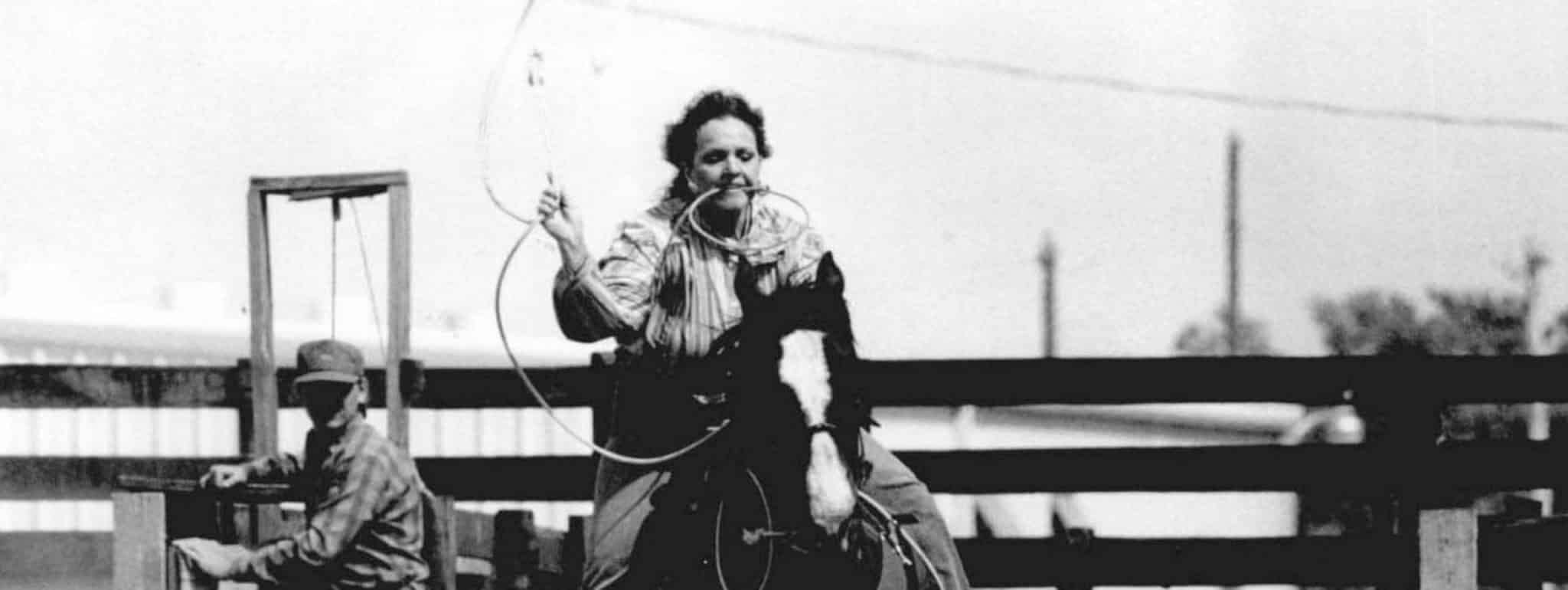
Though the world would eventually come to know Wanda Bush as a champion barrel racer and clinician who taught generations of the world’s best barrel racers, Shanna says her mother was, at heart, a roper.
Bush had plenty of opportunity to hone her skills on the ranch, particularly when heavy rains finally came but brought a major outbreak of screwworms to South Texas.
“She perfected her roping when we had the screwworms so bad in the fifties,” Shanna noted. “They infected everything … cattle, goats, sheep. Everything had to be doctored every day so instead of driving them all to a corral to doctor them, Mom would just rope them out in the pastures.”
That may not have been her father’s intent, but his daughter found a better way.
“Granddaddy would leave her with a bunch of cattle and tell her to drive them to the corral but she’d just go ahead and rope them out there and doctor them instead because it was faster,” Shanna chuckled.
Tracking and catching cattle around bushes and mesquite trees, Bush learned the value of accuracy in her roping as it made the days easier while the ranch fought through the outbreak.
“It was a big job, every day, and it took years to eradicate,” Shanna said.
Extra Funds
The Harpers were resilient in tough conditions and supplemented their income with their ropes. Junior rodeos were few and far between, so the younger Bush and her brother, AC, who came along when she was about 10, often just roped in the open rodeos of the day.
With Bush gaining notice with her rope, it wasn’t long before a challenge arose.
“It started in South Texas,” Shanna explained. “There was a young man who had won the high school finals that year and his dad said, ‘That girl ropes good but she couldn’t beat my son.’”
Eventual Hall of Fame racehorse trainer Bubba Cassio, who knew the Harpers through his involvement with cutting horses, got involved, noting, “I know that girl can out rope your kid.”
When money followed the challenge, it was game on.
“Someone put up a bunch of money and $10,000 was a lot for a ranch kid in those days,” Shanna noted.
Legend has it that Bush went to the lead early, leaving her competitor flustered and floundering.
“The story is that she humiliated that boy so badly that his father got mad and cut up his rope,” Shanna said. “Knowing Mom, she probably felt bad for the kid and told him she was sorry.”
But her family’s finances relied on her rope, and Bush had no small measure of competitive spirit, so the winning continued despite any empathy felt toward the opponents.
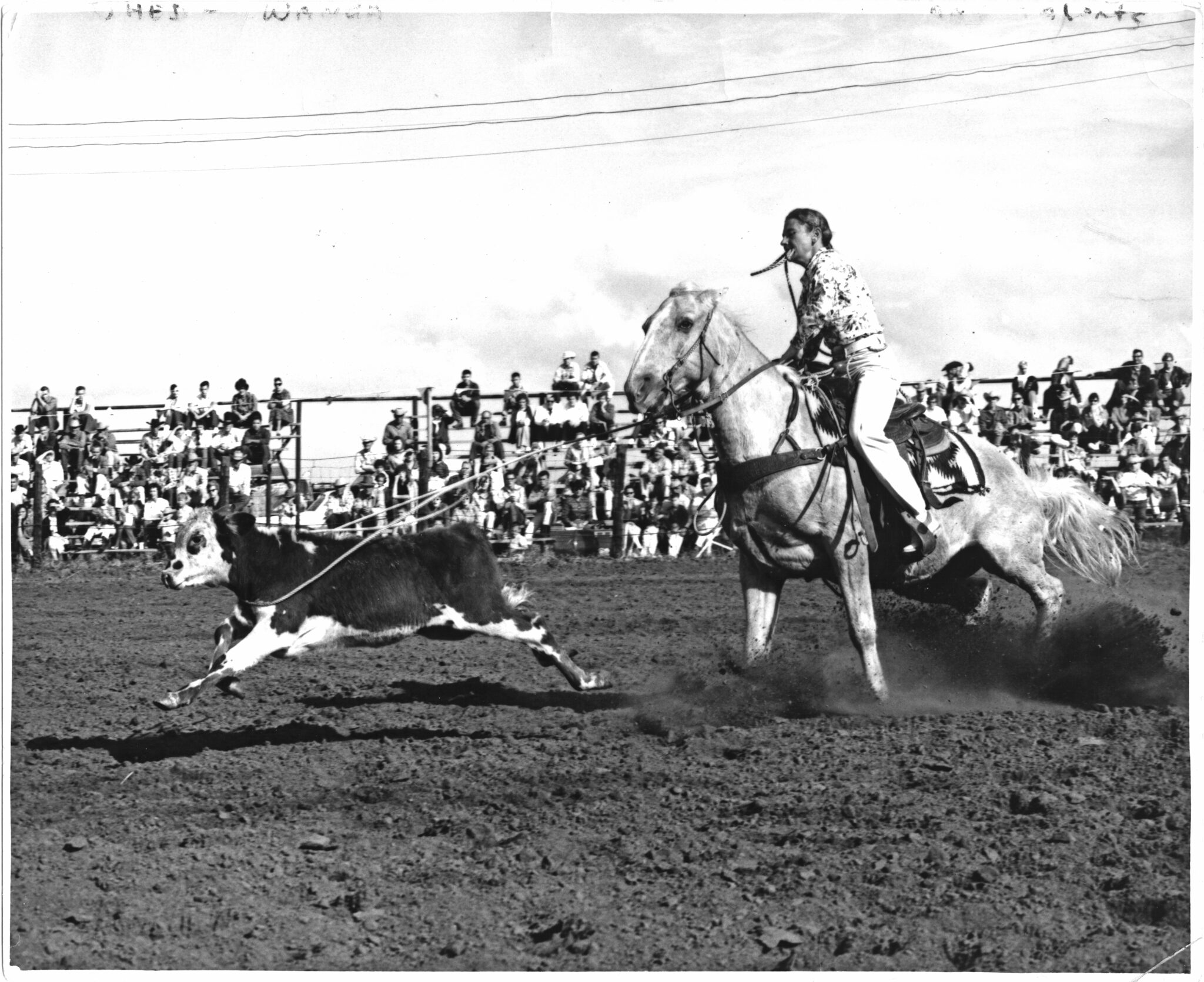
Barely into her 20s herself, Bush matched several men over the next few years, including a six-head match against Pete Taylor in San Angelo in 1956 that she won by more than 20 seconds.
“She beat every man she was matched against,” Shanna said, “but Mom never cared about recognition, it was just one more way to make money.”
Most of the matches were six to eight head on the big, heavy Brahman calves favored in those days. Bush stood 5-foot-4 and weighed barely 100 pounds soaking wet.
“She was very small in stature but larger than life when it came to her talents with a horse or teaching a person.”
Along with legendary toughness, Bush also leaned on phenomenal horsepower, including Phoebe Chess and Flying Eagle.
“Granddad had a great eye for a horse and could train one to do anything,” Shanna said. “In fact, Mom started at the junior rodeos on a calf horse he trained and she did every event on him.”
Alvin Harper favored Phoebe Chess, noting that he worked a lot of rope, critical for helping Bush get calves to the ground. But he also said she could get on Eagle if she was ever in a jam.
“Mom always said you could close your eyes and rope on Eagle because he made it so easy,” Shanna laughed.
Diversifying for Profit
Taking advantage of their location in winter rodeo country for Rodeo Cowboys Association (RCA) ropers, the Harper Ranch also began hosting jackpot ropings, often seeing world champions and, later, National Finals Rodeo ropers on their books.
“You could expect many really good ropers to be here during the building rodeos and they matched Mom against top NFR guys and she out roped them!”
Always the forerunners, the Harpers also hosted annual horse sales based on their ranch-raised bloodlines, the same that produced Bush’s GRA world champions Dee Gee and Phoebe Chess.
“We showed all the horses one day,” Shanna remembered. “We would run barrels, poles, rope, cut and rein on them and then have a huge catered meal and sale the next day. It was all right here at the ranch.”
The Legend
Bush had joined the newly formed Girls Rodeo Association in 1948, earning card No. 14. Her first world titles, in calf roping and ribbon roping, came in the association’s third year in 1951, when Bush was just 20 years old.
Ribbon roping in those days involved a roper who dismounted after catching a calf, grabbed a ribbon from the tail with the help of a mugger and ran it to the finish line afoot.
“Fay Ann Leach was her mugger and they were great friends,” Shanna said. In fact, Leach and Bush would trade titles in the calf roping over nearly 15 years, along with Bush’s hauling partner, Betty Dusek.
Bush married her husband, Stanley, also an accomplished horseman and eventual National Cutting Horse Hall of Fame rider, in 1957, and Shanna was born in 1959. Bush never quit winning GRA world titles, taking championships even through her pregnancy. From 1951 through 1969, the only year she didn’t win at least one championship was 1961.
“Mother and Dad were gone rodeoing one summer when I was tiny and they left me with my grandparents. I guess when they got home from the road, I threw a fit when she tried to take me home and she said, ‘That’s it!’ and she sold the horse she’d won the world on and stayed home to raise her kid,” Shanna said.
“That was Mom, the ranch and family were the most important things to her.”
Later, the Bushes brought Shanna on the road with them and the titles continued to flow. In the end, Bush earned 32 GRA world championships, the most of any cowgirl in the history of the GRA/WPRA to this day.
Eleven of those titles came in the calf roping and another seven in ribbon roping.
Not Quite Retired
By the early 1970s Bush had slowed her competitive schedule, leaning more into clinics where she passed on her knowledge of horsemanship and barrel racing to generations of students. Her last GRA world titles came in 1969, when she collected both the cutting and all-around championships.
Bush came back to qualify for the National Finals Rodeo in Oklahoma City in 1974, her seventh barrel racing NFR qualification. Later, at age 62 and not long after major back surgery, she jump rode for an injured Shanna, earning the reserve title at the 1992 Old Fort Days Futurity aboard Flaming Patrick.
But her final competitive outing with her rope came in 1978, when she was inducted into the National Cowgirl Hall of Fame while it was still in Hereford, Texas.
“When she found out, she decided to get her rope out and compete there [at the rodeo held in conjunction with the inductions],” Shanna laughed.
Down Home Wanda
Beyond the arena, Shanna describes a mother who had relentless energy and drive, whether she was training horses, serving the GRA/WPRA as a board member working to secure approvals at major Texas rodeos and later getting equal money for the ladies, helping students at her clinics or even over the phone, or cooking for her family.
“It was so funny, she would never know what she’d won,” Shanna said. “She would be at the football game on Friday night, working the concession stand. At halftime, they’d watch me twirl or play in a band concert. Then Dad would show up with the horses and they might drive all night to Albuquerque or somewhere to rope or show.”
“But she was always a regular mom who did everything in the world for me.”
Despite her years on the road, Bush was a homebody at heart, happiest at home on the Harper Ranch.
“She loved the ranch,” Shanna admitted. “If she never left the front gates, she would have been happy.”
Thankfully, Bush did leave the ranch, just long enough to leave a lasting legacy of excellence and service, impacting thousands of women in rodeo who have followed.
Notable Accomplishments
GRA World Titles
- All-Around (9)—1952, 1957-57, 1962-65, 1968-69
- Barrel Racing (2)—1952-53
- Cutting (2)—1966, 1969
- Flag Race (1)—1969
- Calf Roping (11)—1951-56, 1960, 1962, 1964, 1966-67
- Ribbon Roping (7)—1951, 1953-54, 1956-59
- National Finals Rodeo barrel racing qualifier (7)—1959-60, 1962-65, 1974
- Reserve World Champion Barrel Racer three times
- Texas Rodeo Cowboy Hall of Fame inductee
- Texas Rodeo Hall of Fame inductee
- National Cowgirl Hall of Fame inductee
- National Cowboy Hall of Fame inductee
- ProRodeo Hall of Fame inductee
- 1989 Coca-Cola WPRA Woman of the Year (first recipient)
- 1998 WPRA Pioneer Woman of the Year
- 2014 WPRA Lifetime Family Heritage Award, Harper Bush Family
- 2014 Lenora Reimers Heritage Award winner