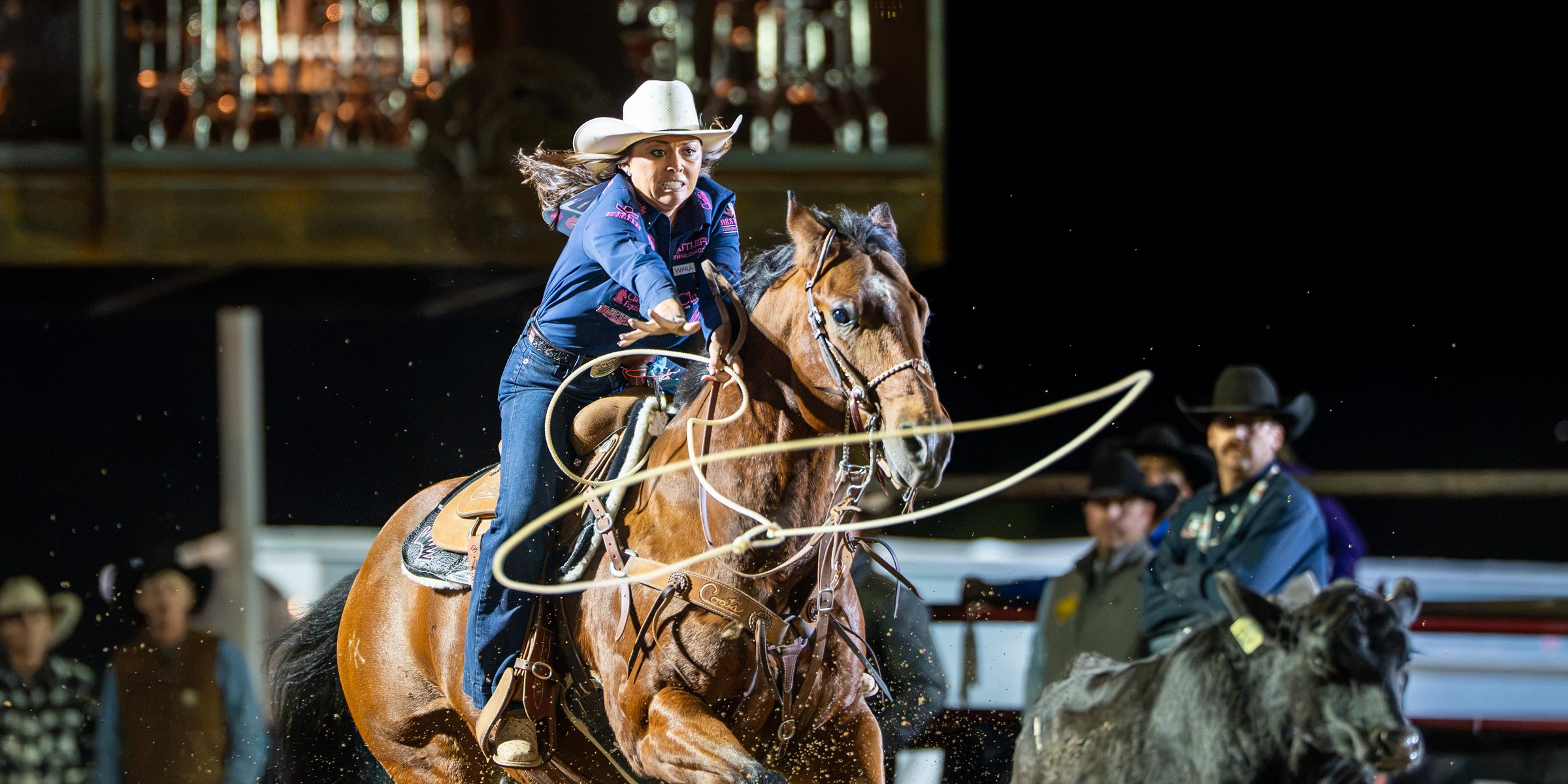
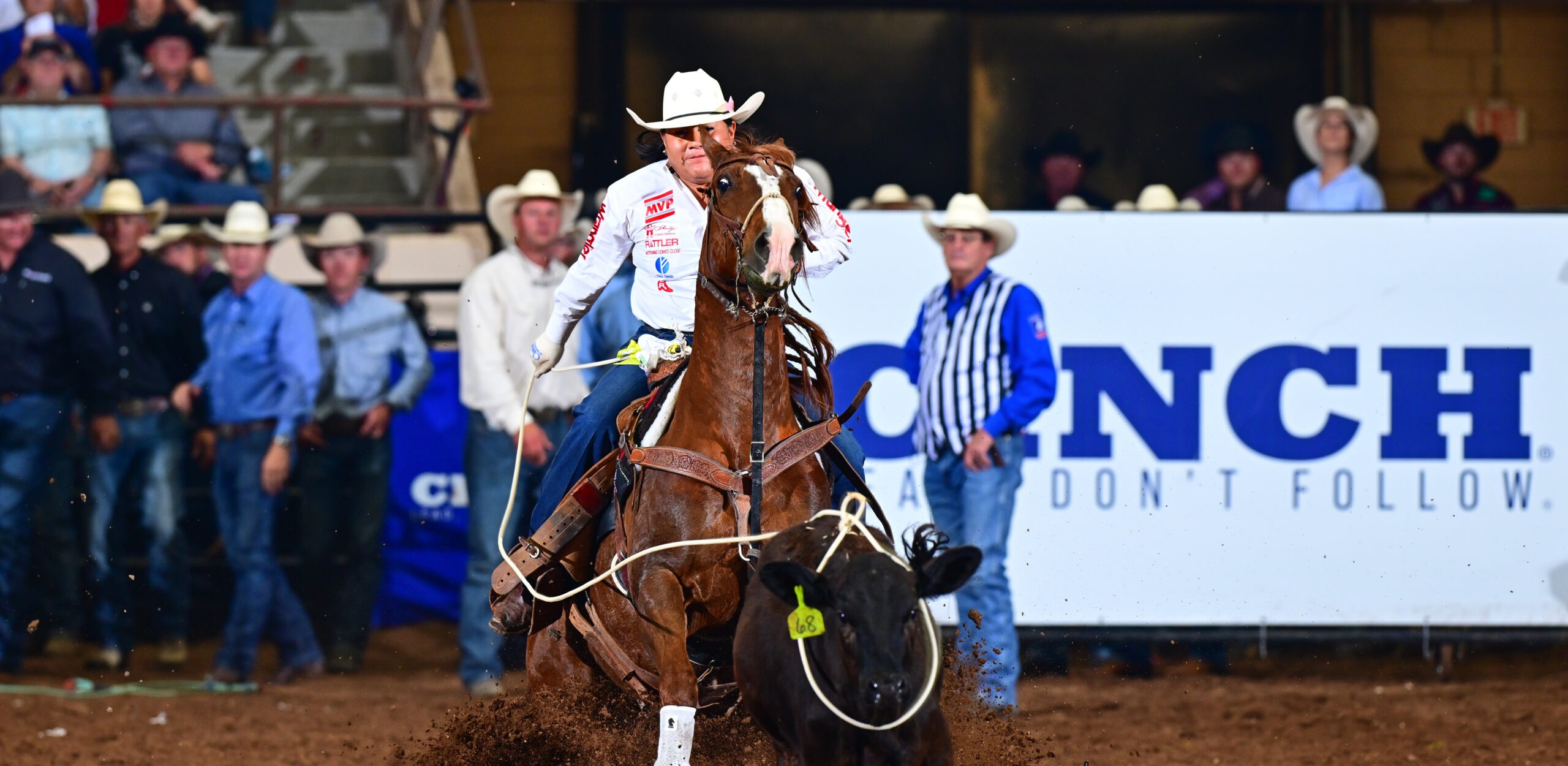
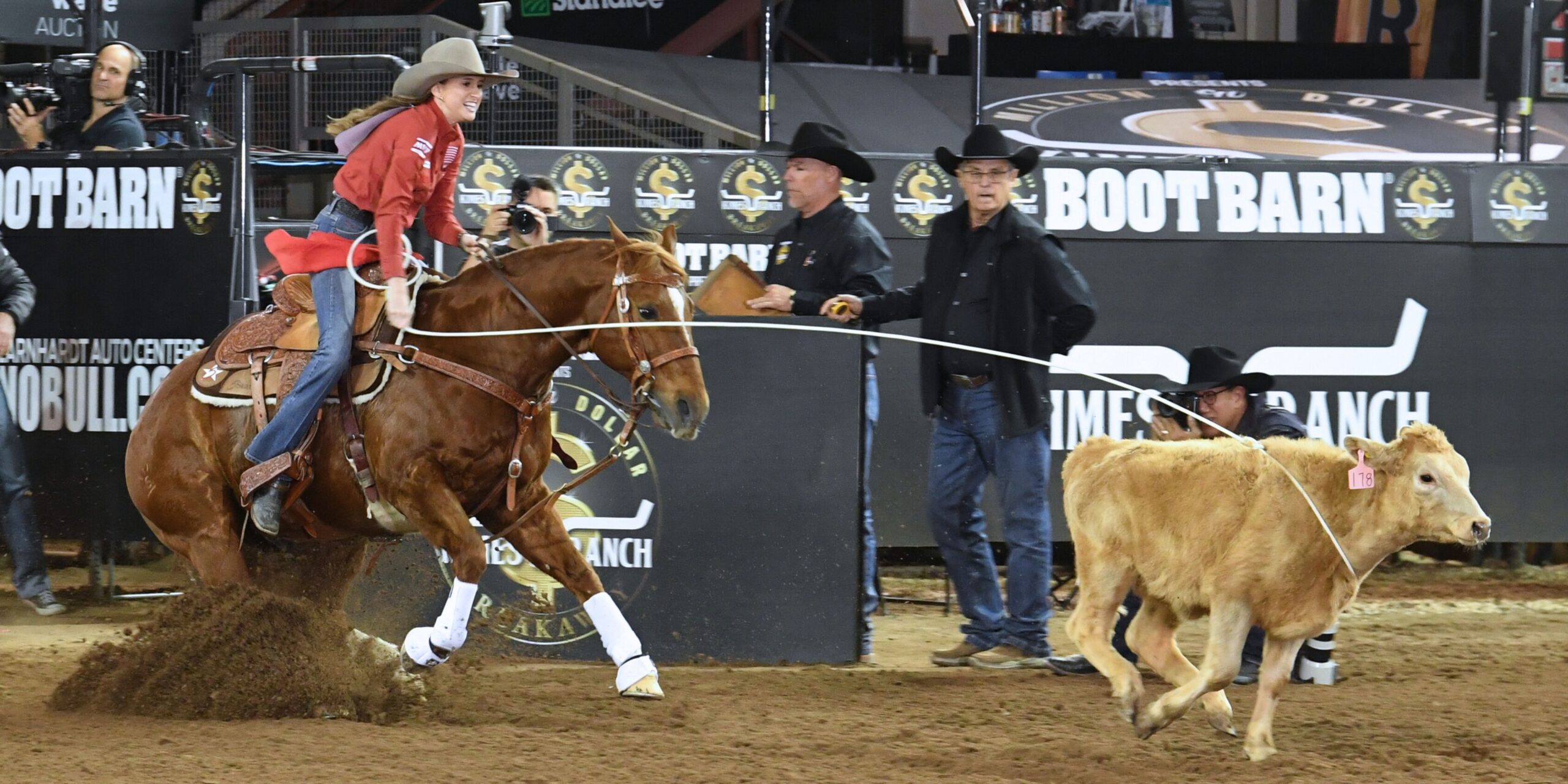
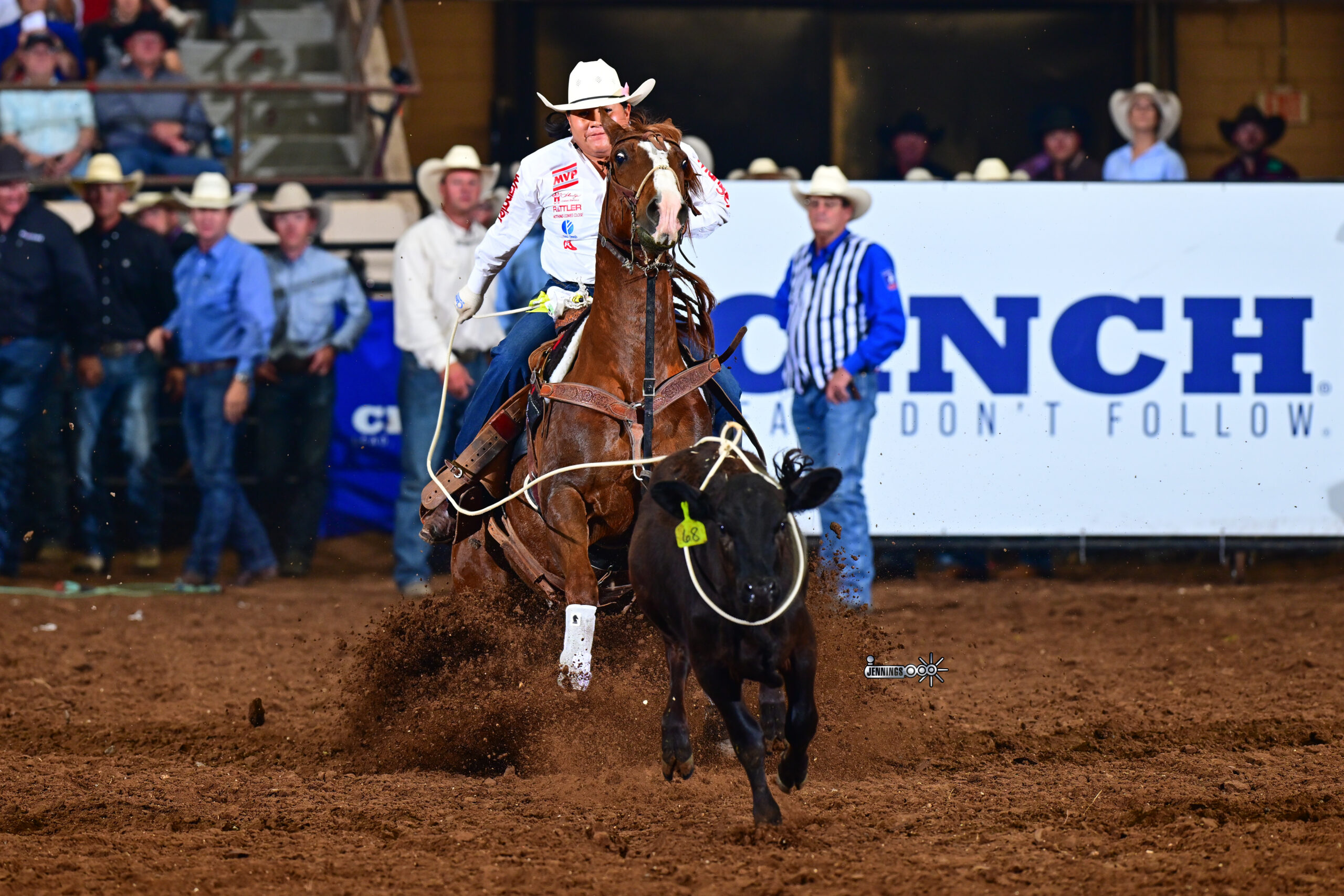
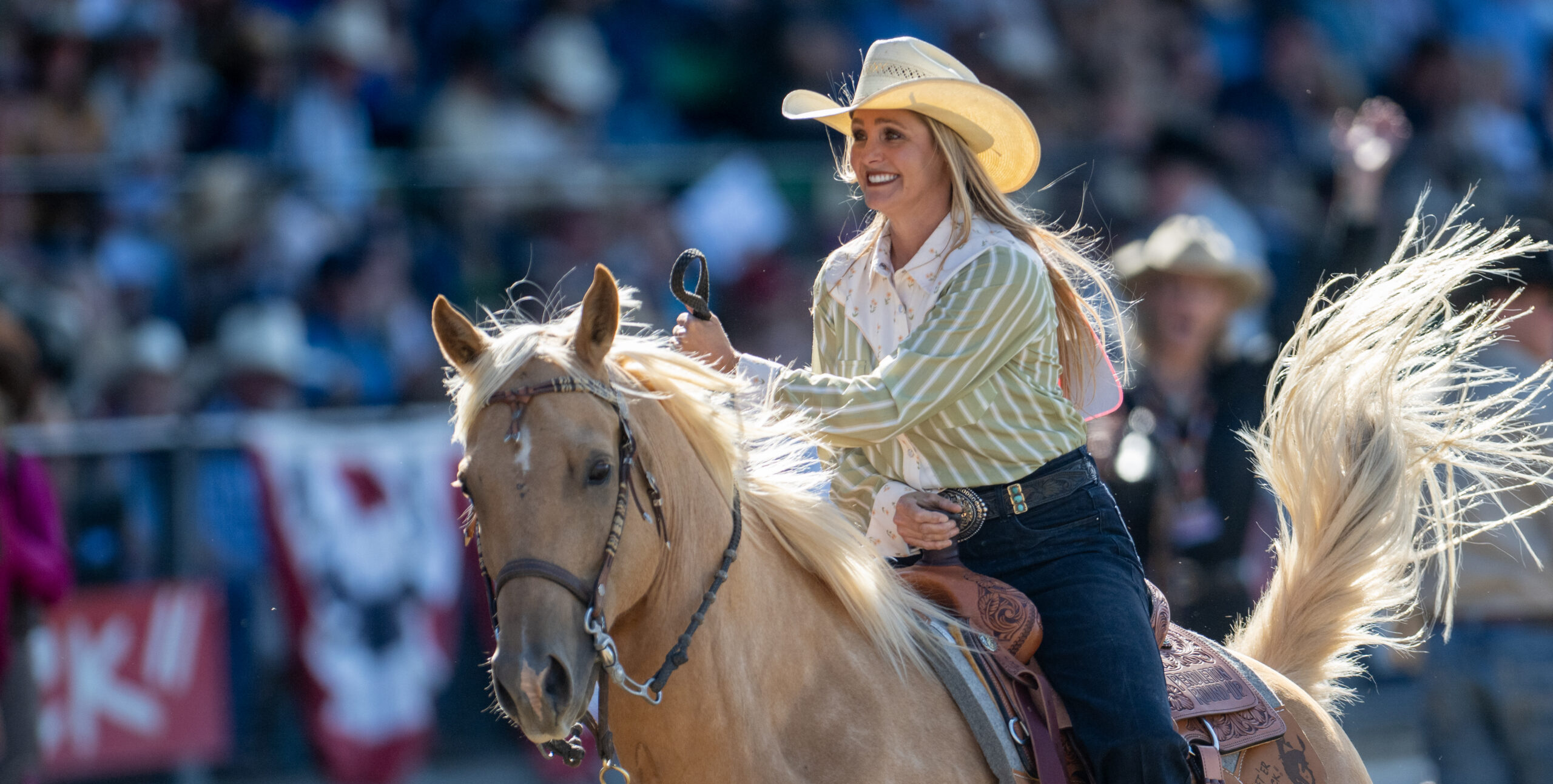
Sometimes, the most important part of a breakaway run is what happens in the span of feet from the back of the box to the barrier pin. How you break from the box—and where you break from—can either put you in the ideal spot for a fast time or keep you out of the money.
Danielle Lowman shares her tips for why and how she incorporates roping from the pin in her practice sessions. Watch the full video on Roping.com.

Breakaway 101: What does it mean to rope to the pin?

In breakaway roping, roping to the pin refers to setting your horse up to leave the box at the pin, which is where the barrier latches to the front corner of the chute. This position—with the horse backed into the back right corner and frame diagonally toward the pin—maximizes a roper’s ability to leave the box flat, smooth and fast, starting the run as close to the calf as possible without breaking the barrier.
READ: Breakay 101 Roping Definitions
1. Walking to the pin and roping from there can improve timing, control and anticipation
“I do a lot of walking. I try to time the calves when they’re coming out. So I’ll just come in here and do a lot of timing. I also try to be consistent with my throttle. If the calf comes out really slow, I won’t pull on my horse but I’ll clutch him to slow him down a little. If the calf leaves a little stronger, I’ll let my horse go a little more so he knows that I’m not going to pull if the calf is out in front of me.”
2. Focus on left-hand consistency
“From [the back of the box] to the pin is what I always work on. Just 100% working on how and when I want my horse to blast and how and when I want my horse to be slow. I know I need to be consistent with my left hand and not necessarily use my feet a whole lot.”
3. Patience, patience and more patience
“Being patient with your horse right here can get you a long way. Take it slow and make sure your horse knows what his job is. I just want to take it slow, do a lot of scoring, let him breathe and reward him. And rewarding your horse outside the box is as important as doing it inside the box. Some horses will blow up because they don’t get rewarded a whole lot and people just kind of rush them into it.”
Master your start. The “Breakaway Box Work & Scoring” video series covers how to effectively score, managing your horse’s behavior in the box, the best box work drills and much more.