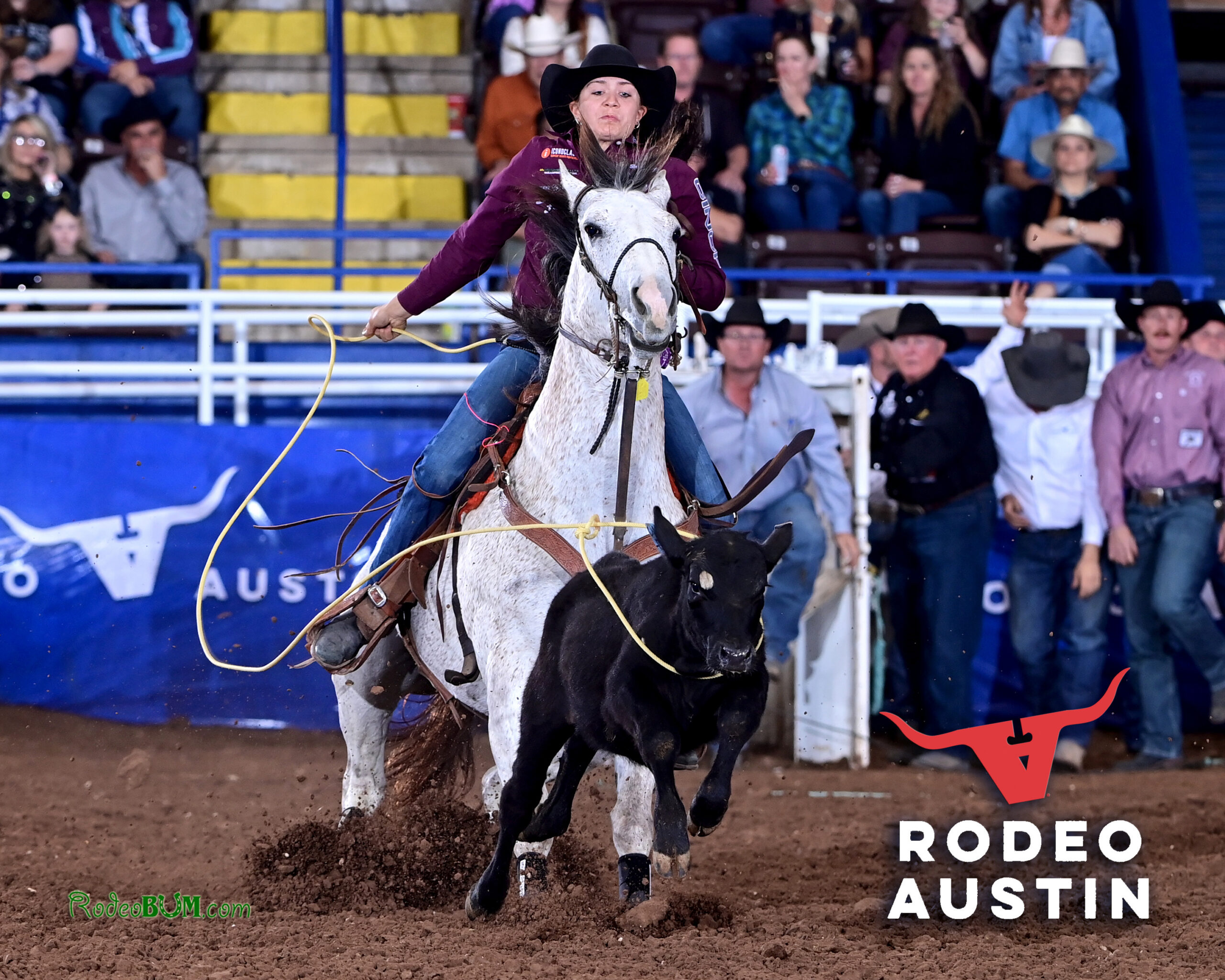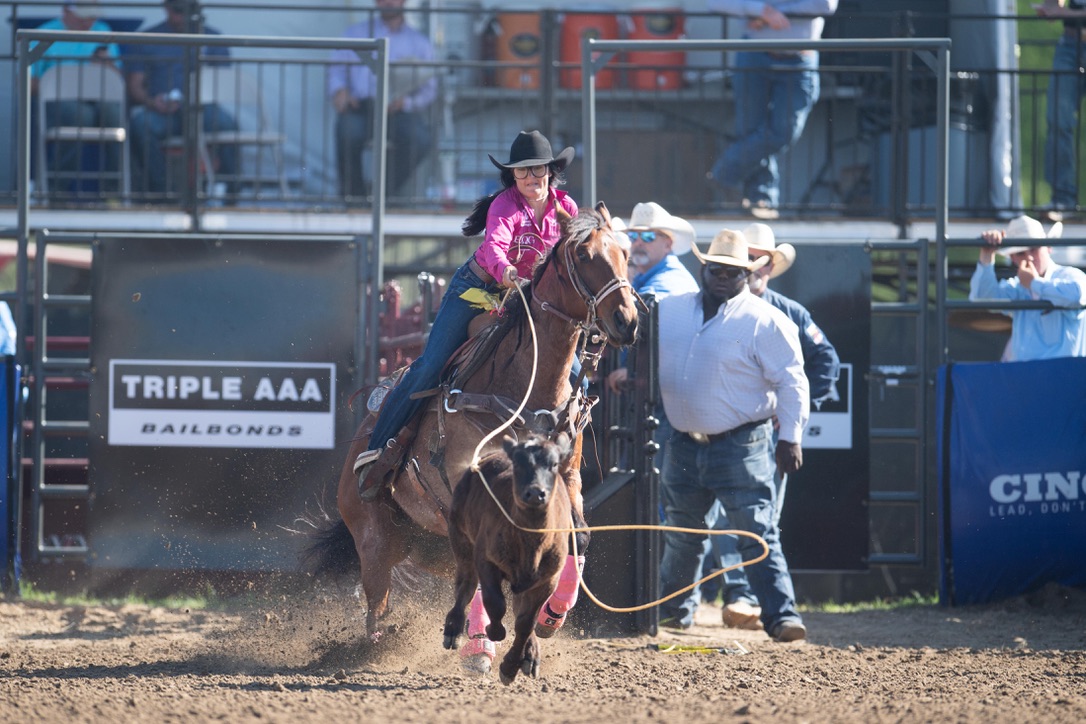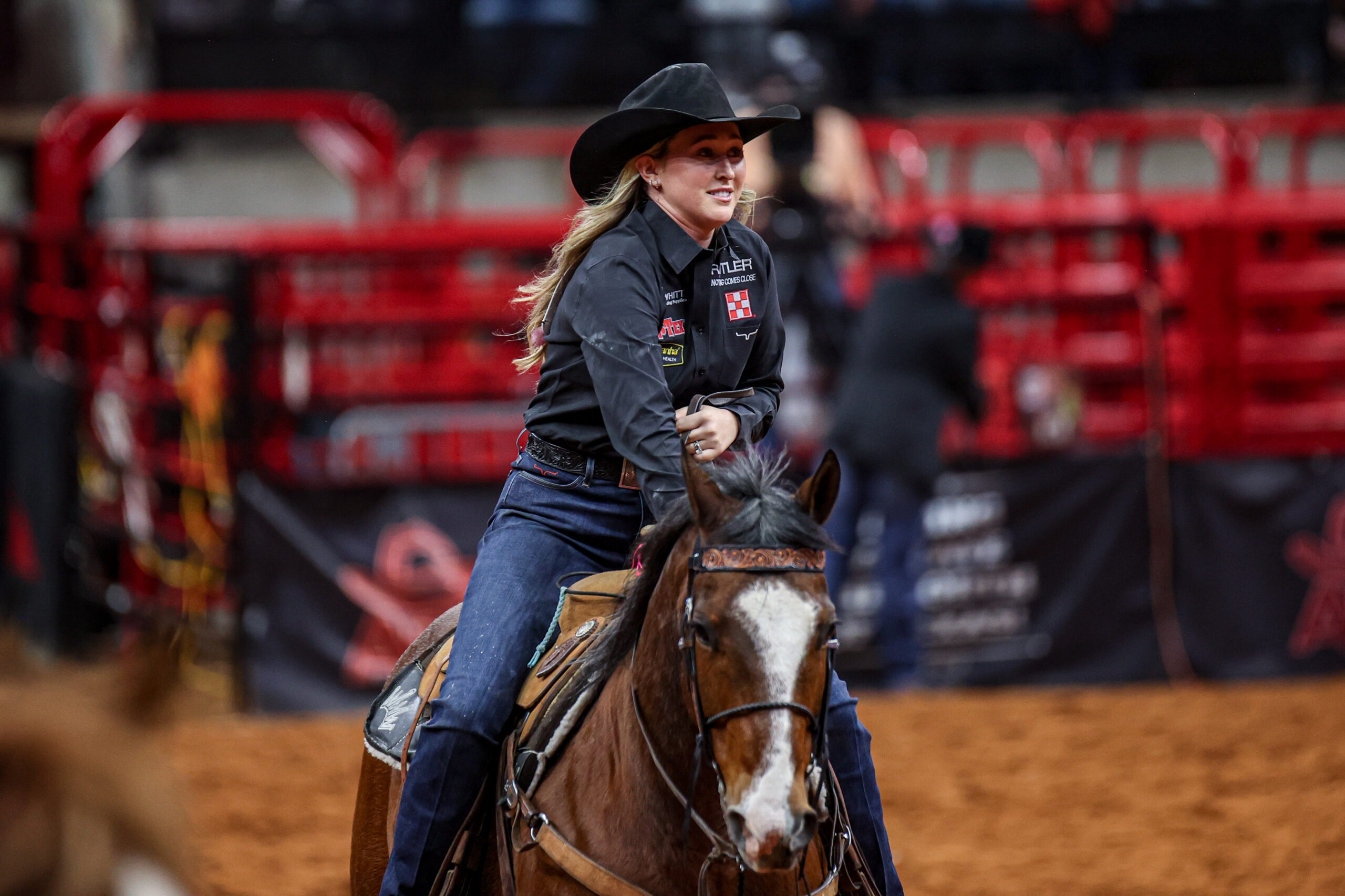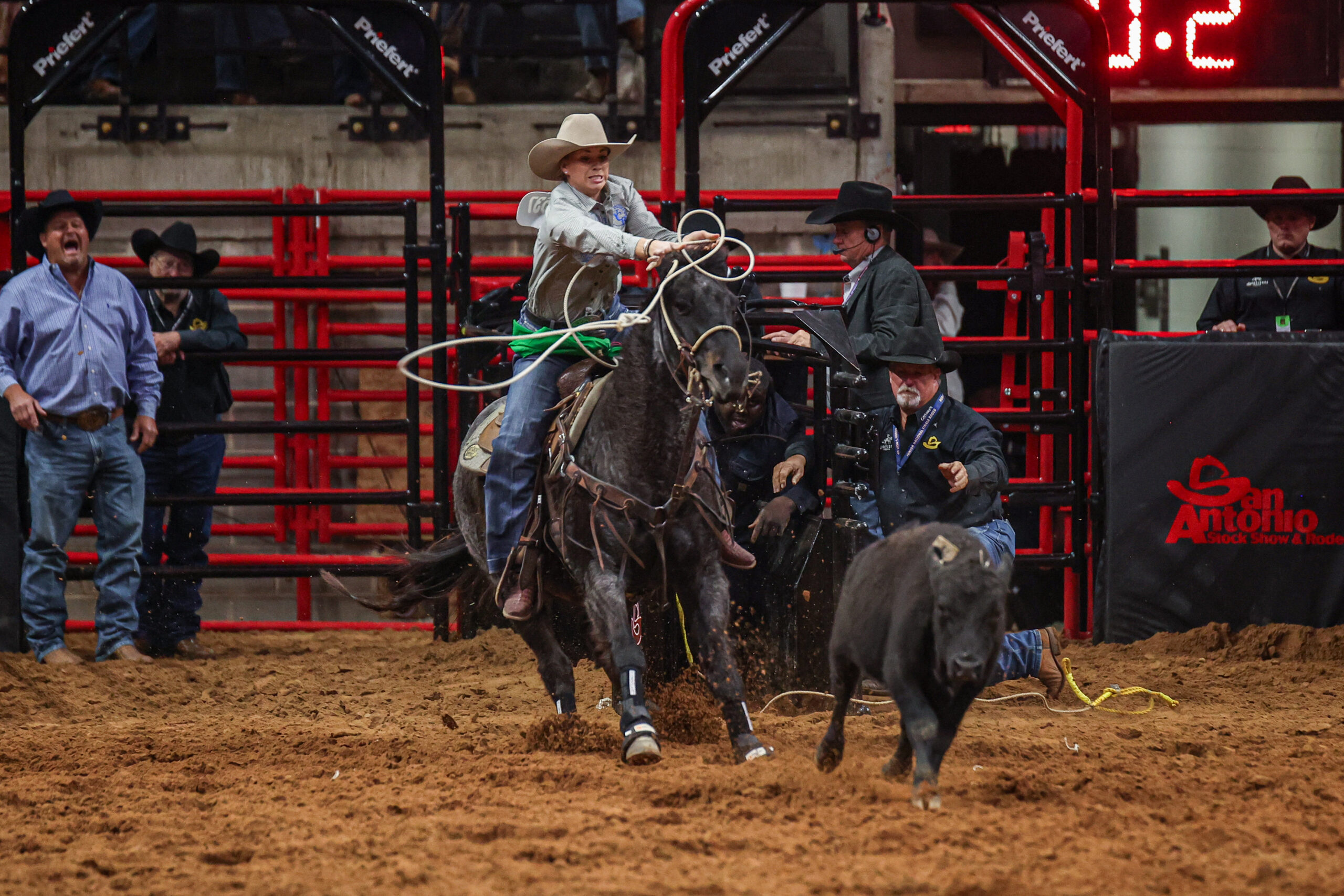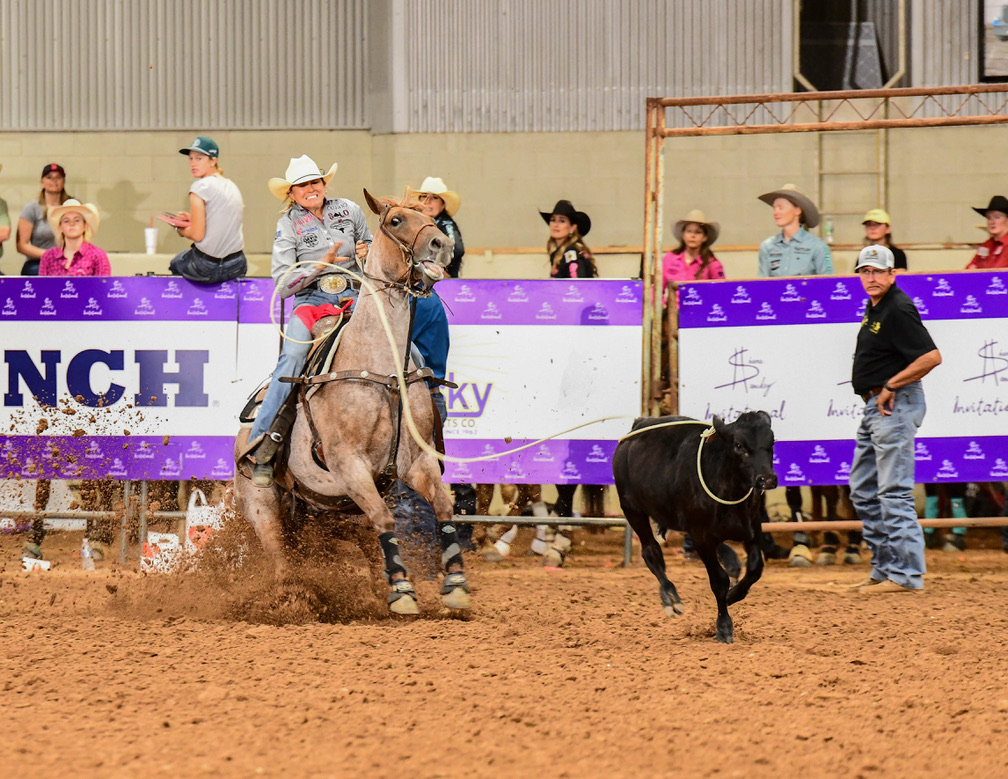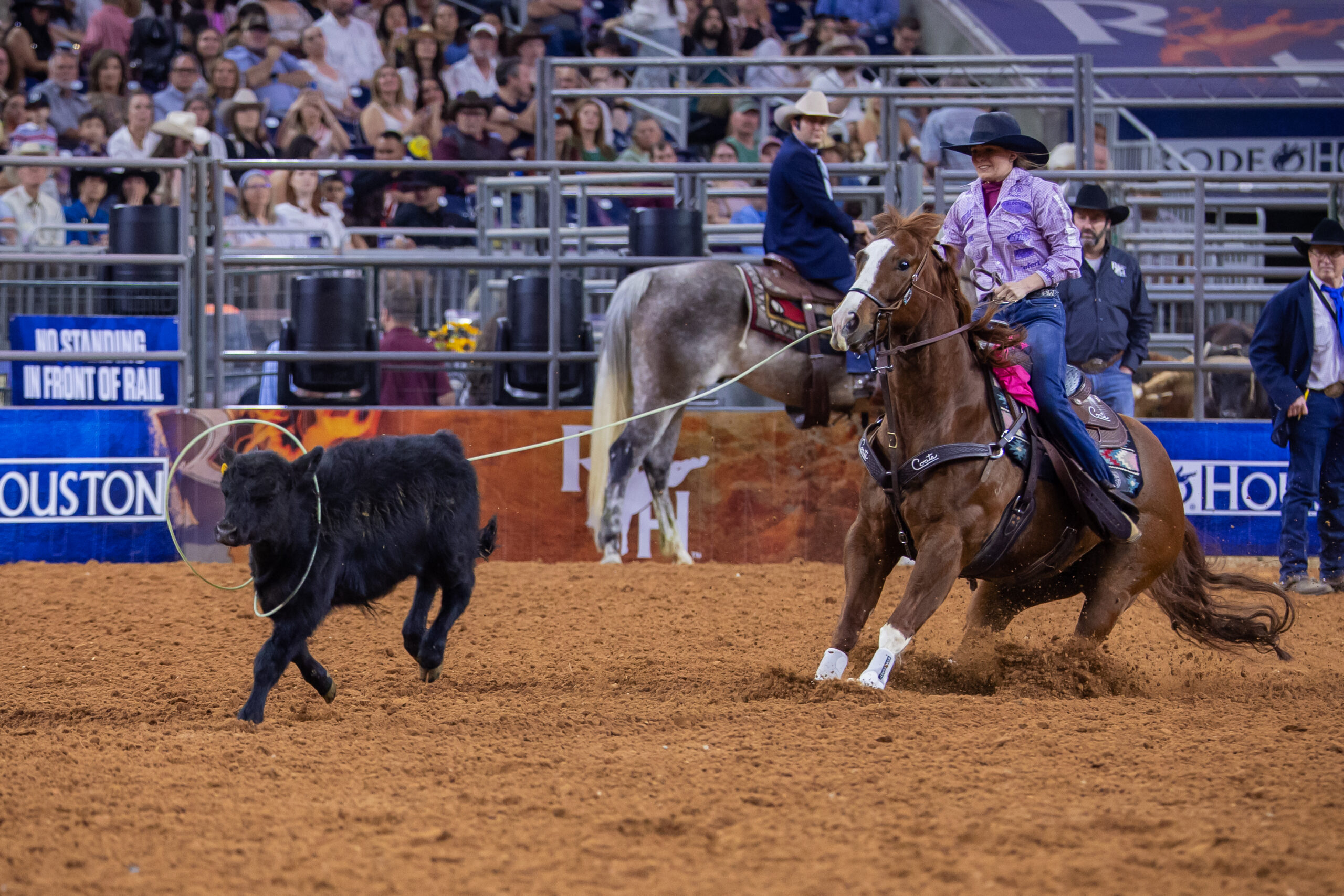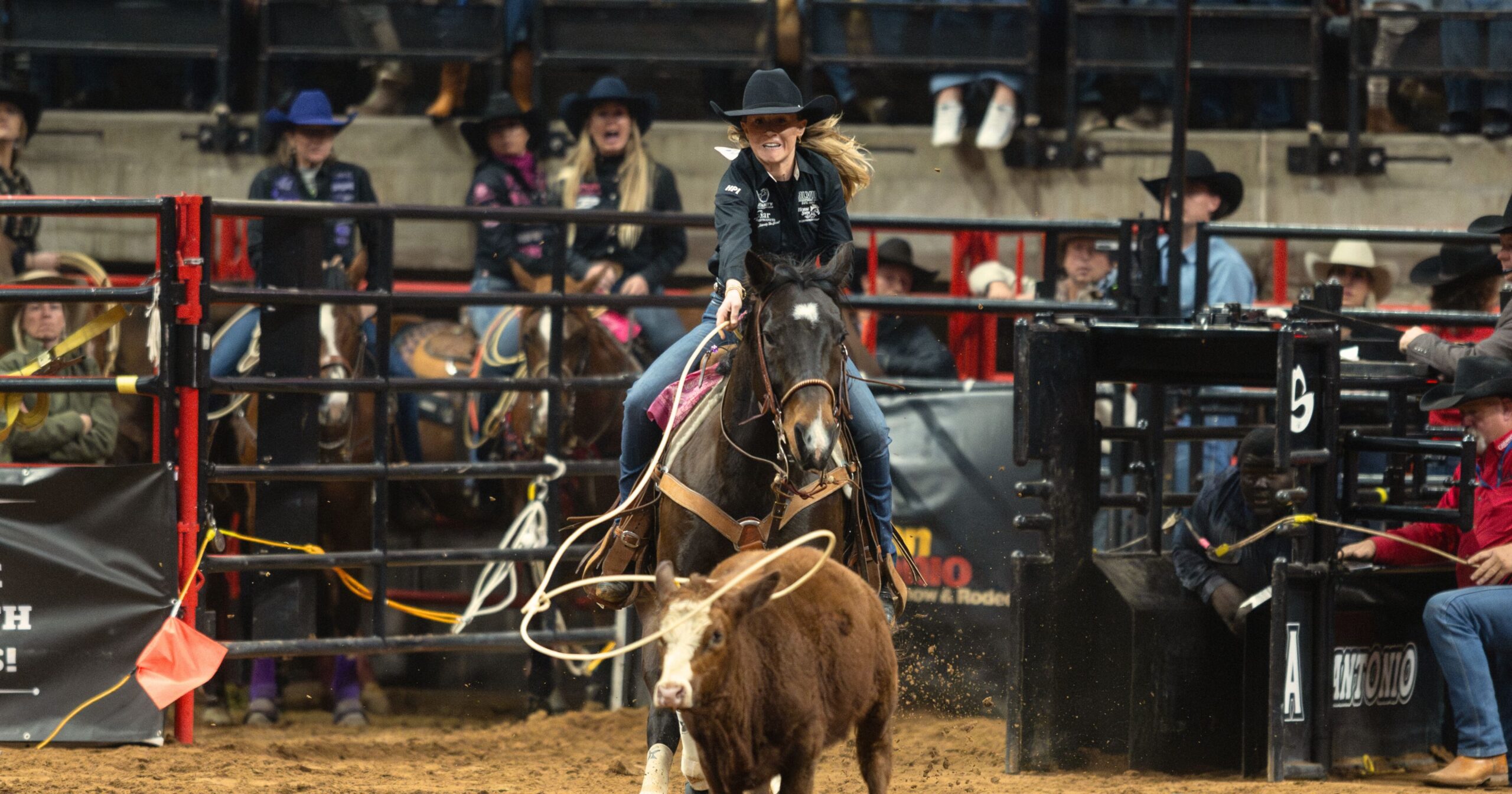
Aspen Miller has fast breakaway times down to a science, no doubt thanks to her horse, Jigsaw, who shines in the short setups where every hint of “tight” walks the fine line between a 1.7-second run or a miss.
What is a “tight” horse and what causes it?
In breakaway roping, the words “tight” and “short” are often used interchangeably. A tight horse is one that begins to anticipate the end of the run and reacts before the roper is ready. The hallmark sign is when a horse quits or stops too soon, robbing the roper of the length and timing they need to deliver a clean loop.
Some horses—especially the catty, electric, short-setup specialists—are naturally more prone to tightening up. In the winter buildings where hundredths matter, those horses can be an advantage: they get you to the calf quickly and are ready to shut it off. But it’s a fine line between sharp and restrictive. A horse that “shorts” you can take away your delivery and force a miss.
Miller knows that line intimately with her standout mount Jigsaw. He’s explosive, ratey and excels in tight setups—but when Miller gets out of position or shows her delivery too early, Jigsaw is smart enough to read it and tighten up on her.
“He reads every signal I give him,” Miller said. “If I get over the front or lead with my head, he feels it—and that’s what makes one tight.”
Below are Millers’s three biggest keys to managing a talented “short” horse.
Tip 1: Stay Square and Ride with Your Feet
One of the biggest causes of a tight horse, Miller says, is a breakdown in the rider’s own position. If the rider tips their upper body forward, it signals to the horse that the throw is coming. That’s when a horse anticipates the stop.
“On my first run at Guymon this year, I was leading more with my head than riding square,” Miller said. “When you push to the front end, when your head is over your saddle horn, they feel it. That’s what entices a horse to stop.”
Riding square in your upper body, staying in the middle of your saddle, and driving with your feet through your delivery keeps the horse honest and forward.
On the second-round run at Guymon—where Jigsaw stayed perfectly free—Miller attributed it entirely to better riding:
“I rode to my position before I showed anything,” she said. “I stayed square, sat in the middle of my saddle, and drove with my feet through the delivery. He never even thought about stopping.”
Tip 2: Don’t Let Your Head Get Ahead
When Miller talks about “exposing” herself, she means giving away her delivery before she’s actually in position to throw. It happens when she leans forward, peeks over her horse’s front end, or drops her shoulder toward the calf too early.
That small shift in body language is enough to tell a smart horse—especially one like Jigsaw—that the run is almost over.
For horses that are naturally ratey or tight, keeping your head, shoulders, and hips in line is essential. It prevents the horse from mistaking your posture for the cue to stop.
“When you lean forward, they feel you,” Miller said. They know the throw is coming. Don’t lead with your head.”
You can learn from Aspen Miller on Roping.com.
Tip 3: Don’t ‘Show Them’ Your Throw
Another signal that can make a horse short is change in the swing before the delivery.
Jigsaw, like many short-setup horses, reads body language and rope patterns. If Miller suddenly changes her swing speed, widens her last swing, or lifts dramatically into her delivery, he reads that excess movement as the cue to shut it off.
“If you change your last swing and try to get big and open, it’s a signal,” Aspen said. “You’re moving more and changing in your delivery, and that can get them tight.”
Keeping the swing even, rhythmic, and consistent helps prevent the horse from anticipating. The quieter the rider’s movement, the freer the horse feels.
“If they don’t feel your delivery as much, they stay more free,” Miller said.
BONUS: What Aspen Does at Home
When Miller gets the chance to tune on Jigsaw between rodeos, she focuses on two things:
1. Scoring—A Lot
“That’s where it all starts,” Miller said. “He needs to be the sharpest right there so I have the same shot every time.”
2. Riding Him Through the Spot
If she feels him getting tight, Miller will:
- move up the pen without throwing
- reinforce that she—not him—decides when the run ends
“I don’t want him too free where he’s not reading anything,” Milelr said. “But I don’t want him tight, either. It’s a fine line.”