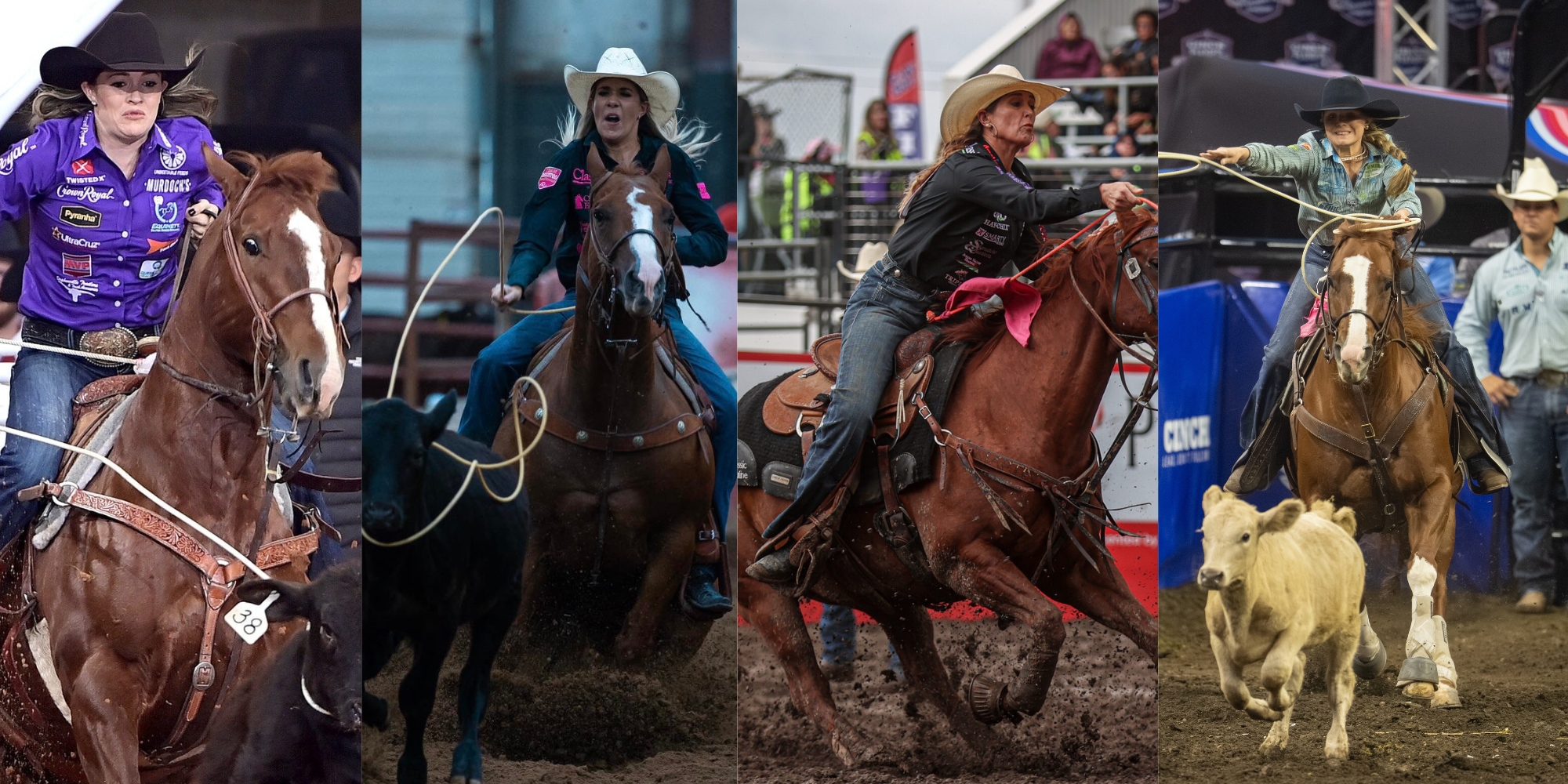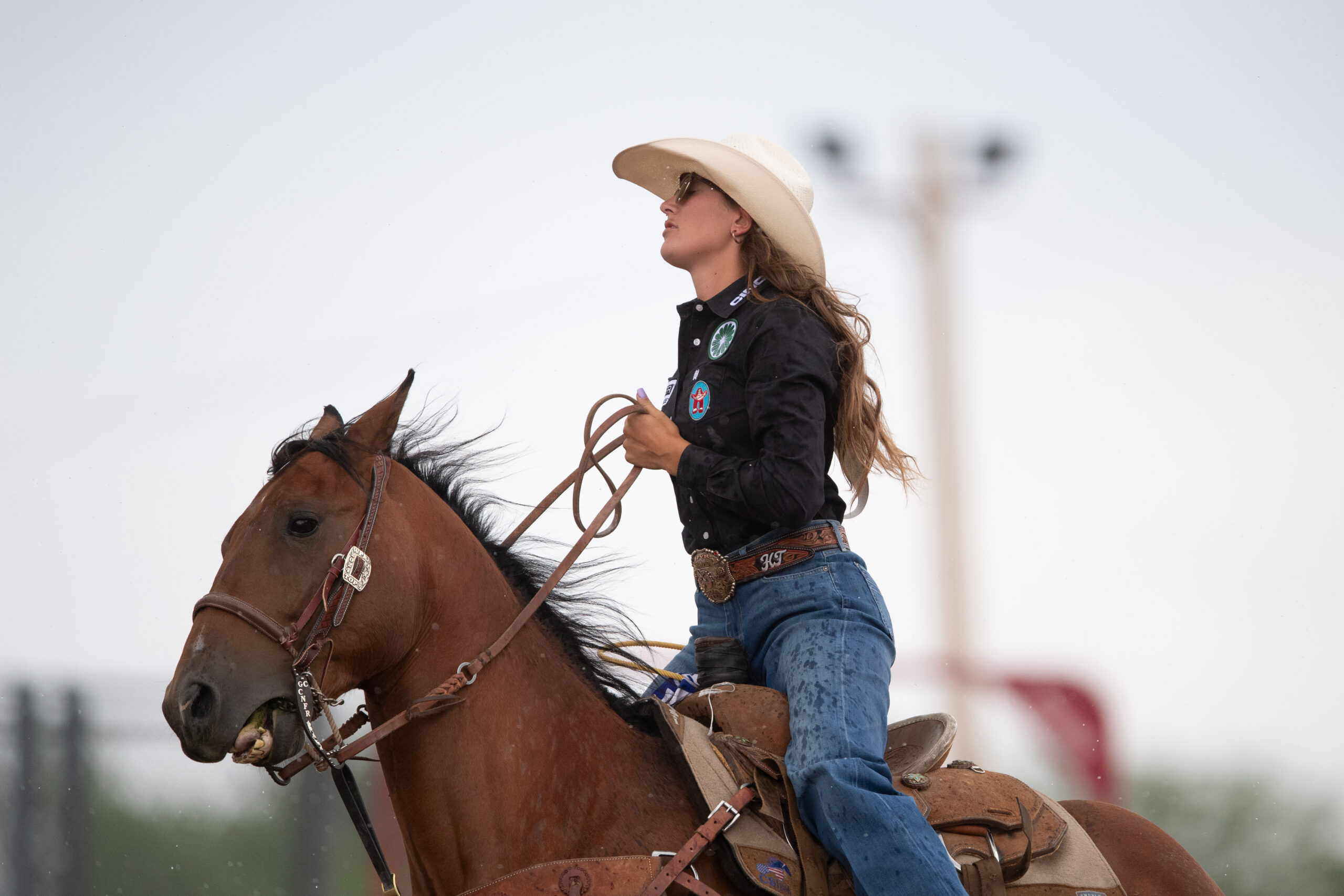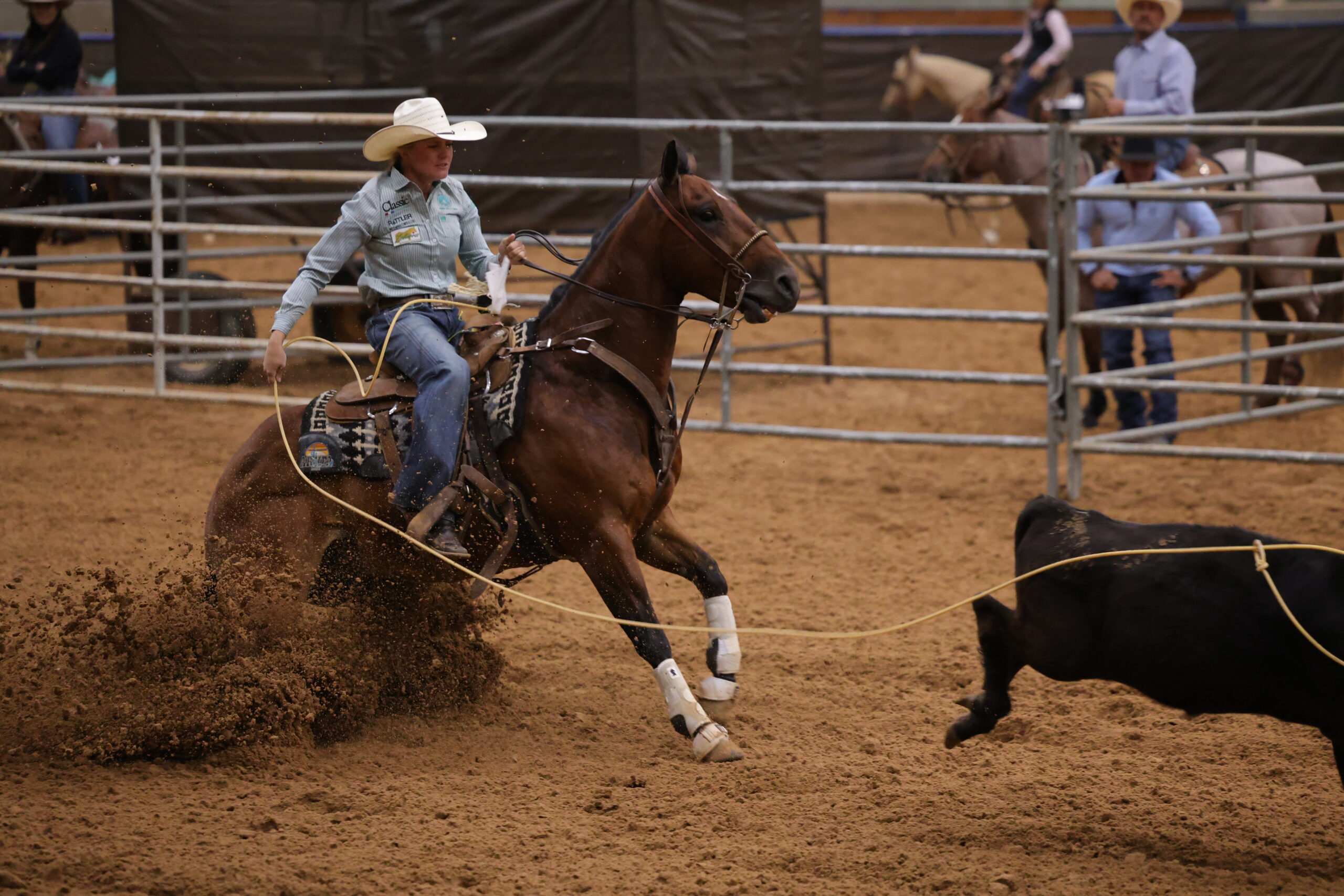
With 16,693 points to lead the breakaway roping in the World Championship Junior Rodeo standings, Remi Wells is proving she’s not just a contender—she’s one of the most versatile young cowgirls in the game, also sitting No. 3 in the team roping heading.
At 18 years old, the Central City, Nebraska, native has built her game around doing it all—barrels, poles, goats, breakaway and both ends of the team roping—while balancing a packed high school rodeo schedule and winters spent in Arizona. Homeschooled and headed to Cochise College this fall, Wells credits her all-around upbringing, her family and a roster of mentors for shaping her into one of the most complete competitors in the WCJR field.
Q: You’re leading the breakaway and sitting third in the heading—what would you say is your biggest strength across all of your events?
A: I would say probably the breakaway for sure— breakaway then the team roping. I would call myself a stronger header than a heeler. I started out heeling. I heeled for clear through junior high, I still heel obviously, but probably I would say breakaway is probably my strong suit. I travel the most for that and I tend to focus on that.
Q: You truly do everything—where did that all-around background come from?
A: Starting out, I did the junior rodeos around Nebraska— I didn’t really get big into any associations by any means. I had an older brother who rodeoed and a lot of it was thanks to him. If I didn’t have him growing up, I wouldn’t be able to do half of the things that I get to do. I had a lot of his horses that he had, a lot of hand-me-down horses that were awesome. Then I got into the junior high and did everything. I roped for the ribbon rope in my sixth-grade year. I did everything, goats, barrels, poles, team rope, all of it.
Q: Where have most of your WCJR points come from this season?
A: The majority of my points come from our high school rodeos in Nebraska because we have so many. I think we have 28 total. Then the Little Britches rodeos over the winter in Arizona. My mom and dad actually put on the Little Britches here in Central City. Then whatever other youth breakaways I can hit.
Q: You spend your winters in Arizona—how has that changed your roping?
A: Even just this last winter, my roping got so much better. Being surrounded by that group of people that are down there, I mean, anybody who’s committed to leaving their home for three or four months, that’s a commitment level in itself. The eye-opening experience that it was to go down there and just see … I mean, I go team rope two or three or four times a week. And breakaway, I go to probably four or five breakaway jackpots a week if I want to. I usually try to hit three or four consistently, just keep me sharp, keep my horse sharp. It just makes you so much better so fast.
Q: When you’re juggling this many events, what does that balance look like week to week?
A: I’d like to say it’s pretty secondhand nature, but then again, some days or some weeks it’s pretty challenging to get all my horses rode, keep my barrel horses legged up and then make sure I’m roping a couple three pens of calves a week. I don’t get to team rope a lot during the week— I rope the dummy mainly. Then especially when we get into high school season, I keep my cutter rode down, my cow horse legged up. It gets challenging. But I’d like to think that I’ve done it for so long that I really don’t know anything else.
Q: Breakaway is your strongest, but also the one you get the most nervous in—why is that?
A: It’s definitely my most mentally challenging event. The team roping, it’s just never really been something I get nervous about. But I definitely can get into an overthinking head space. I like to think that if I just stick with a routine—I’m really big on my routine—when I walk in the box, turning my horse around a certain way, switching my rope, I try to keep it down to a routine to stay in one head space.
Q: Does heading affect your breakaway at all technically?
A: For sure. I for sure struggle, especially when my heading starts going really good. I notice my breakaway loop, it gets a little wonky at times. So I think that’s where it gets tough, especially during the high school. I do head the majority, so trying to keep that balanced out.
Q: Tell me about your main breakaway horse.
A: I call him “Woodrow.” He’ll be 18 this year and I’ve had him for going on four years now. I actually got him from Paul and Robin (Tierney). They came to me and said, “I have this horse for you and I think he’s going to be super great.” We’ve clicked from day one and he’s been the biggest help in my breakaway these last few years. He’s a super, super powerful horse, really big for a breakaway horse.
Q: What makes the WCJR such a special event to you?
A: Personally, it is one of my top favorite events. I mean, just the energy in the Lazy E whenever you’re there for anything is awesome. I love that arena—I know my horses love that arena too, but just the environment and then being around those other kids that are top youth competitors is pretty awesome to see. It’s such an elevated event that it makes it feel like it’s the real deal.
Q: As someone coming up in this era, how important are these opportunities for breakaway ropers?
A: It’s super, super exciting. I think we even take it for granted sometimes because we’ve known about it always. But seeing past generations that didn’t have it, that didn’t quite get that opportunity, it’s almost a missed opportunity for them. Where we have the opportunity to get so much better and just get out there and prove ourselves as a competitor.