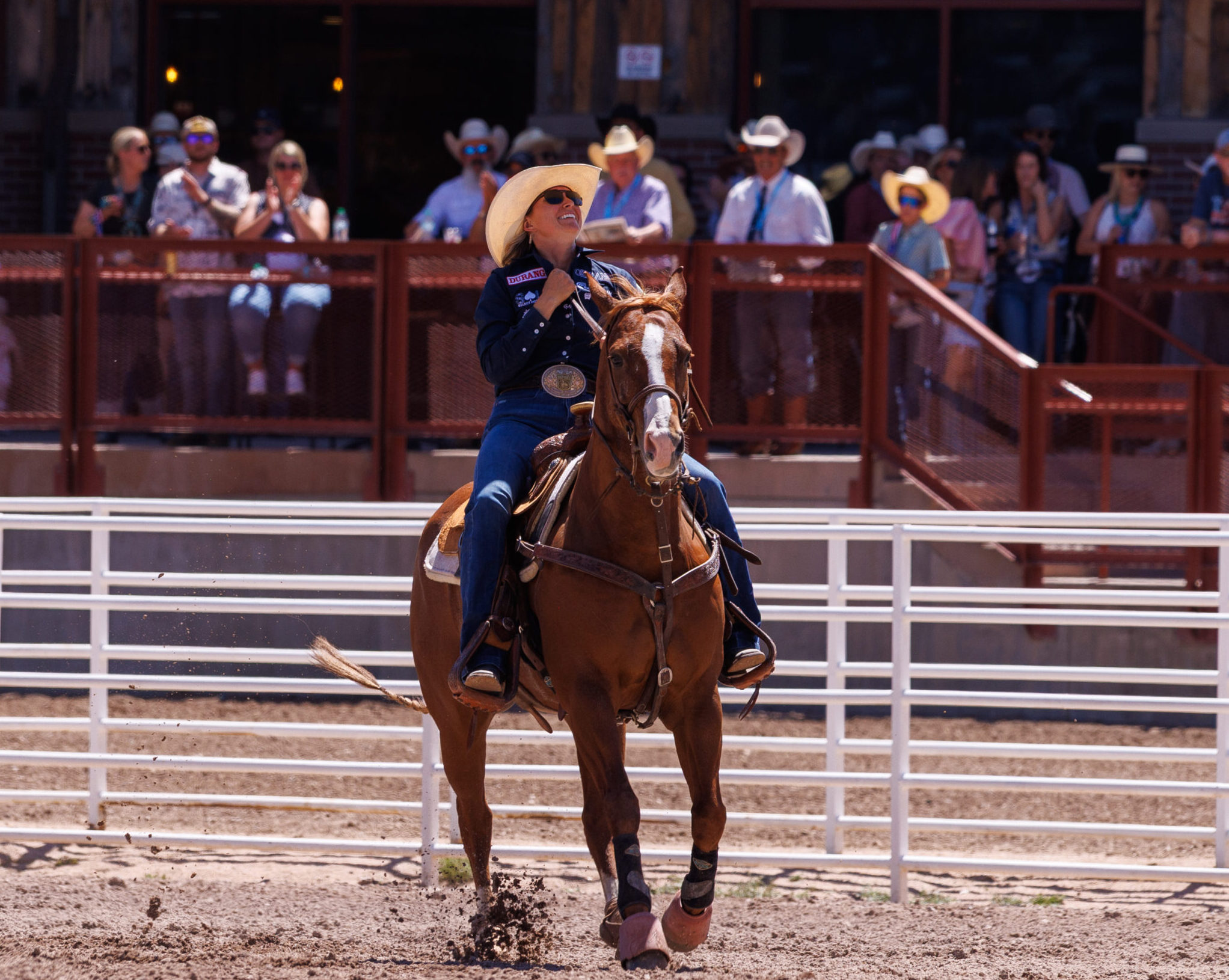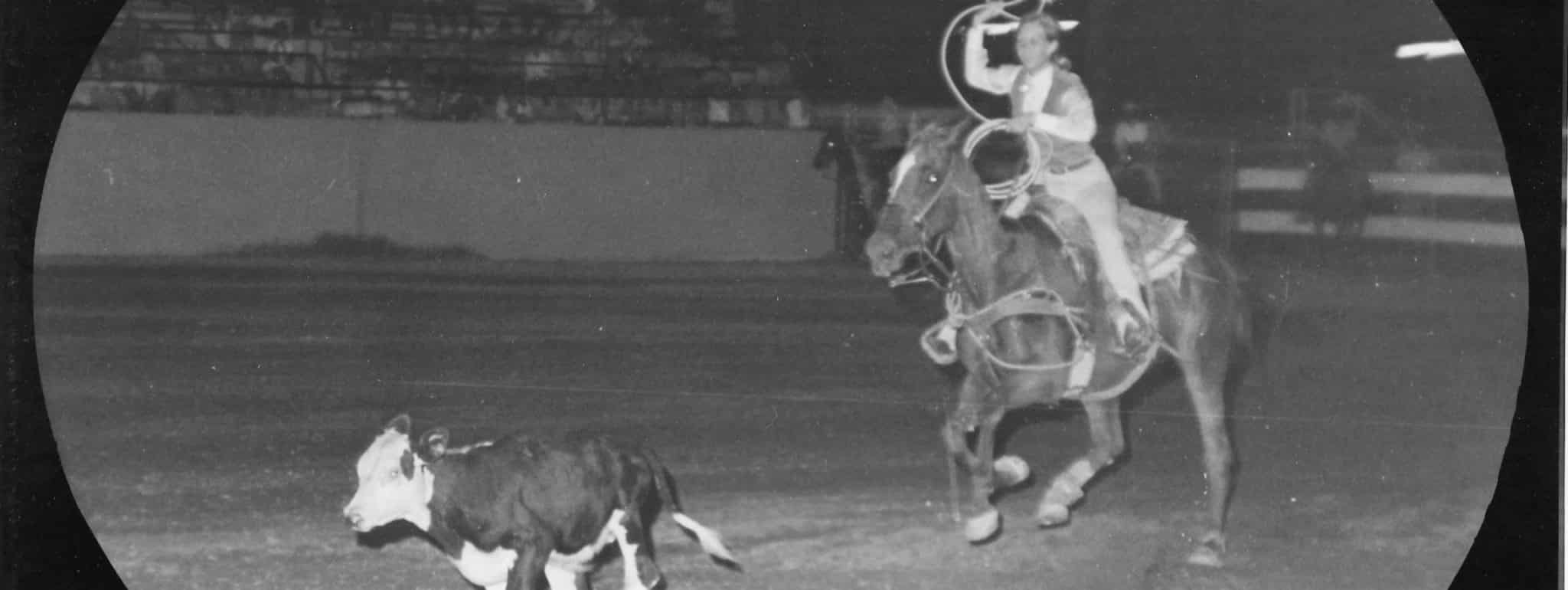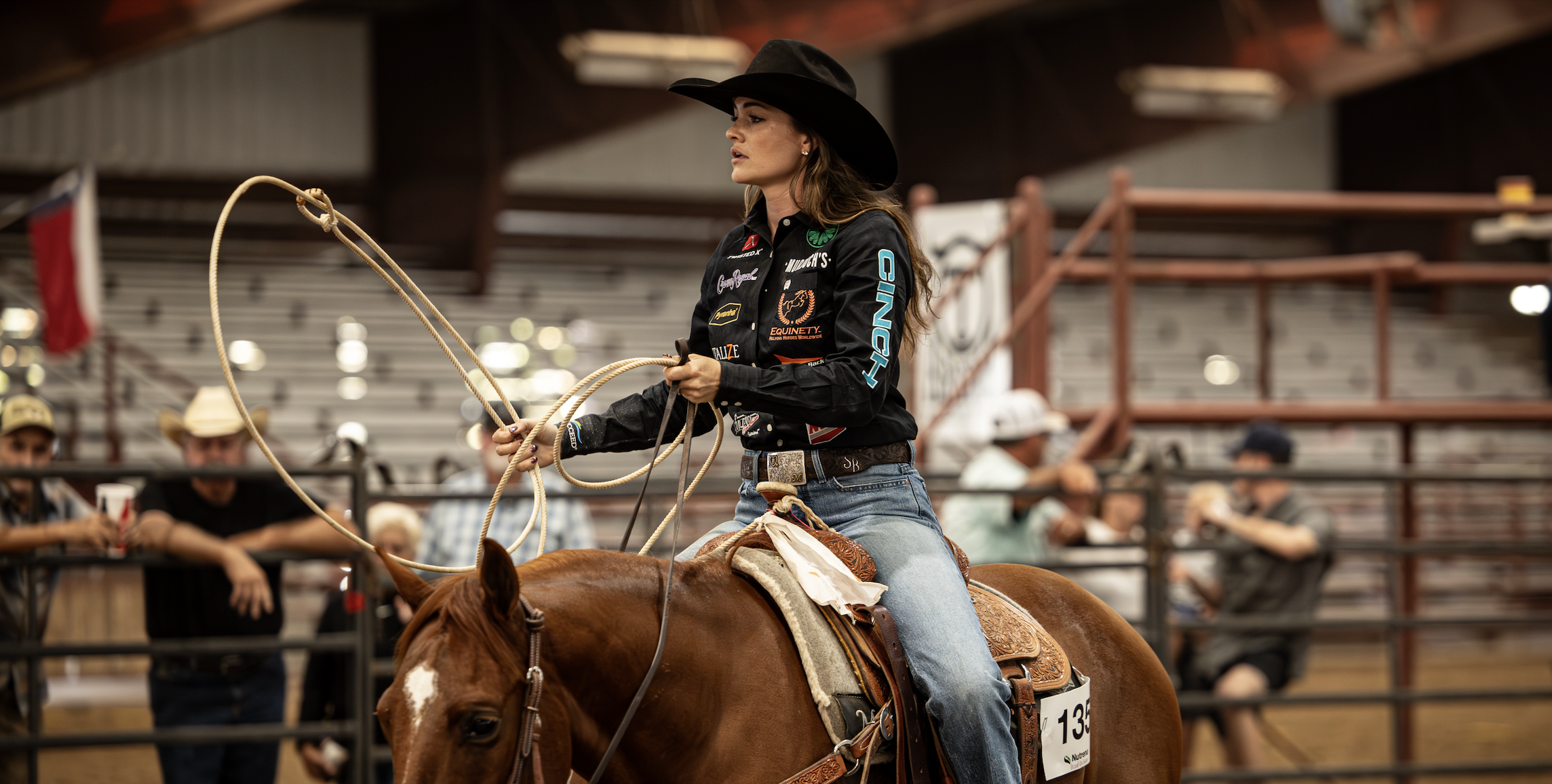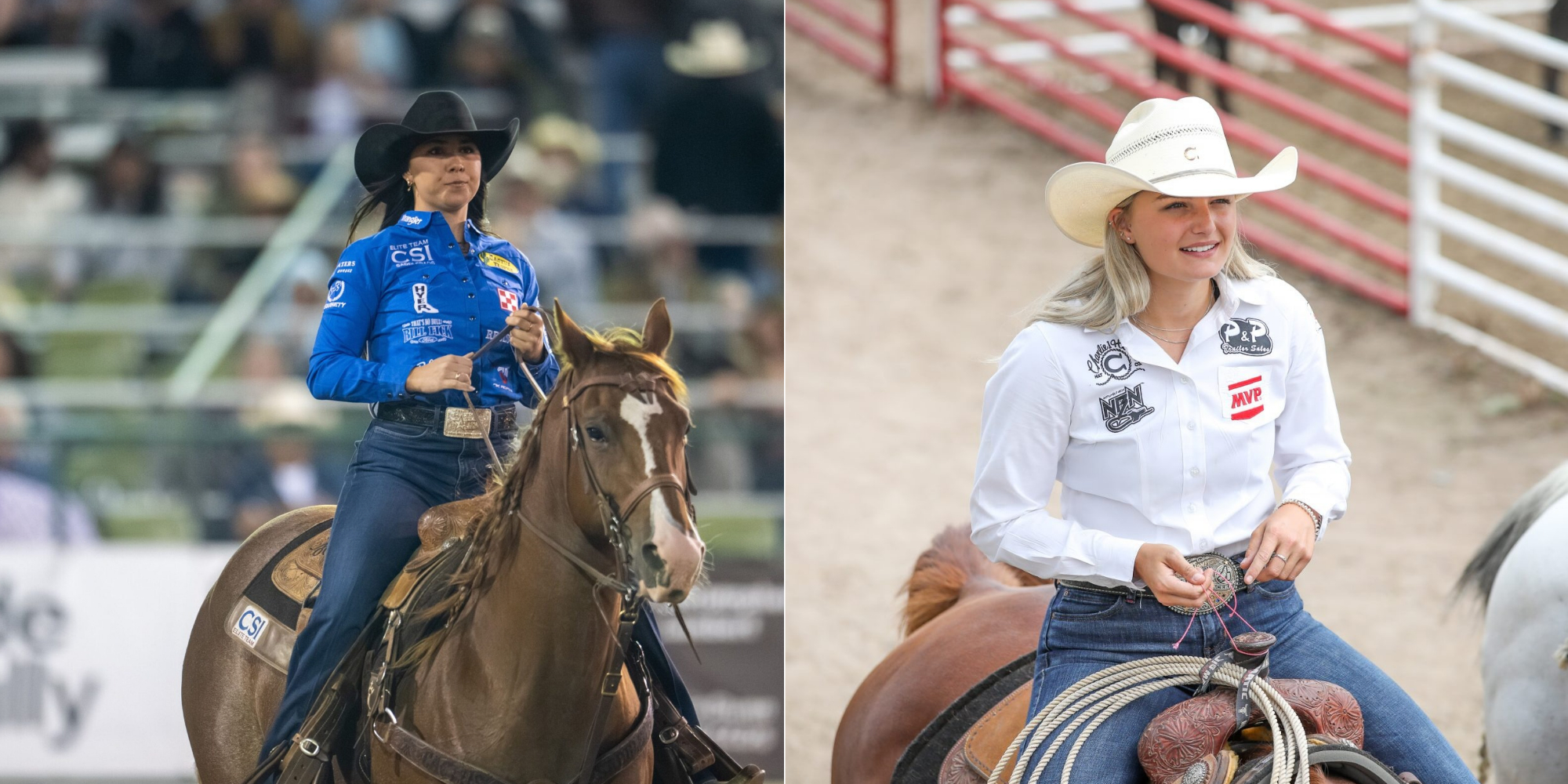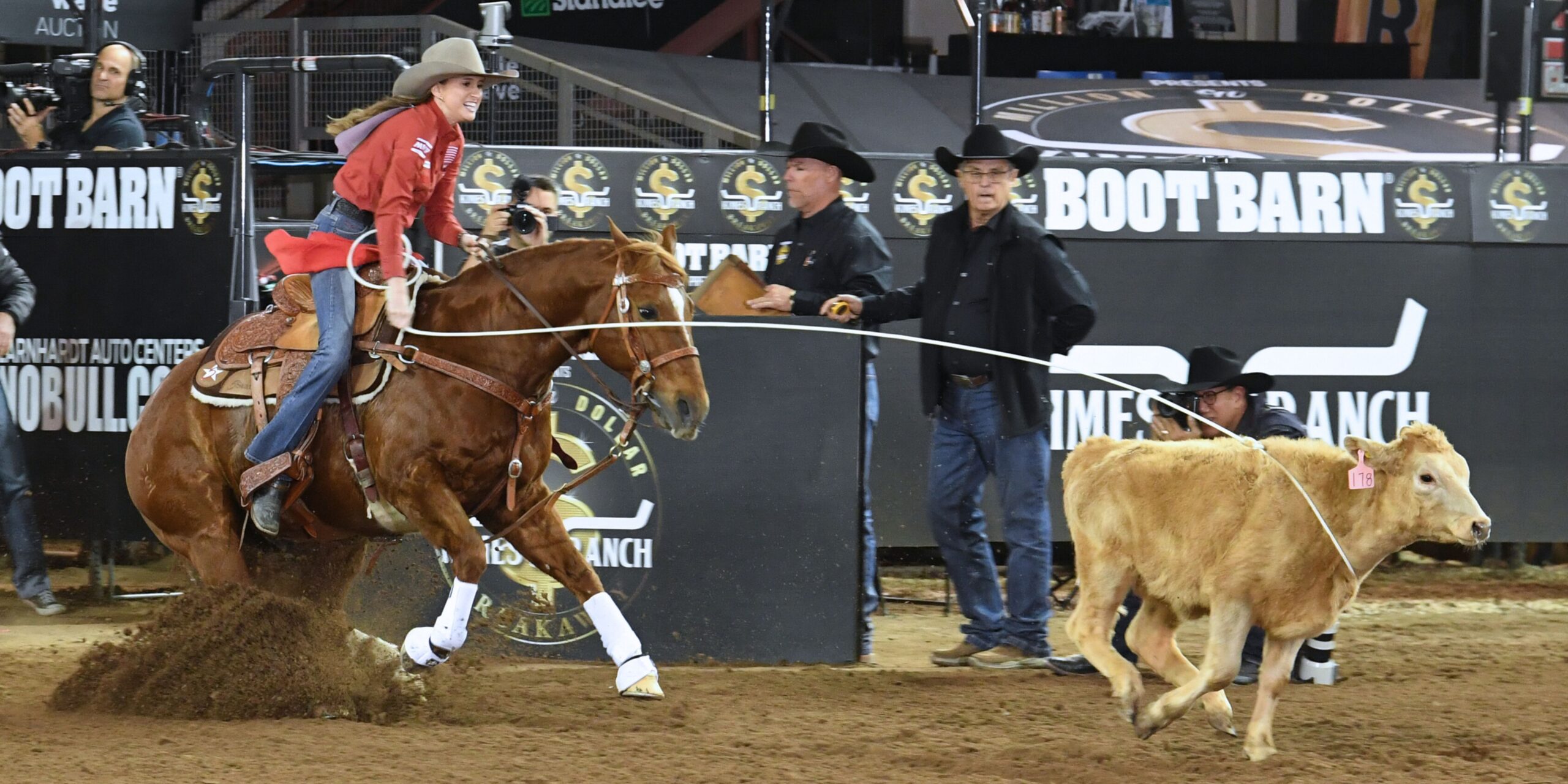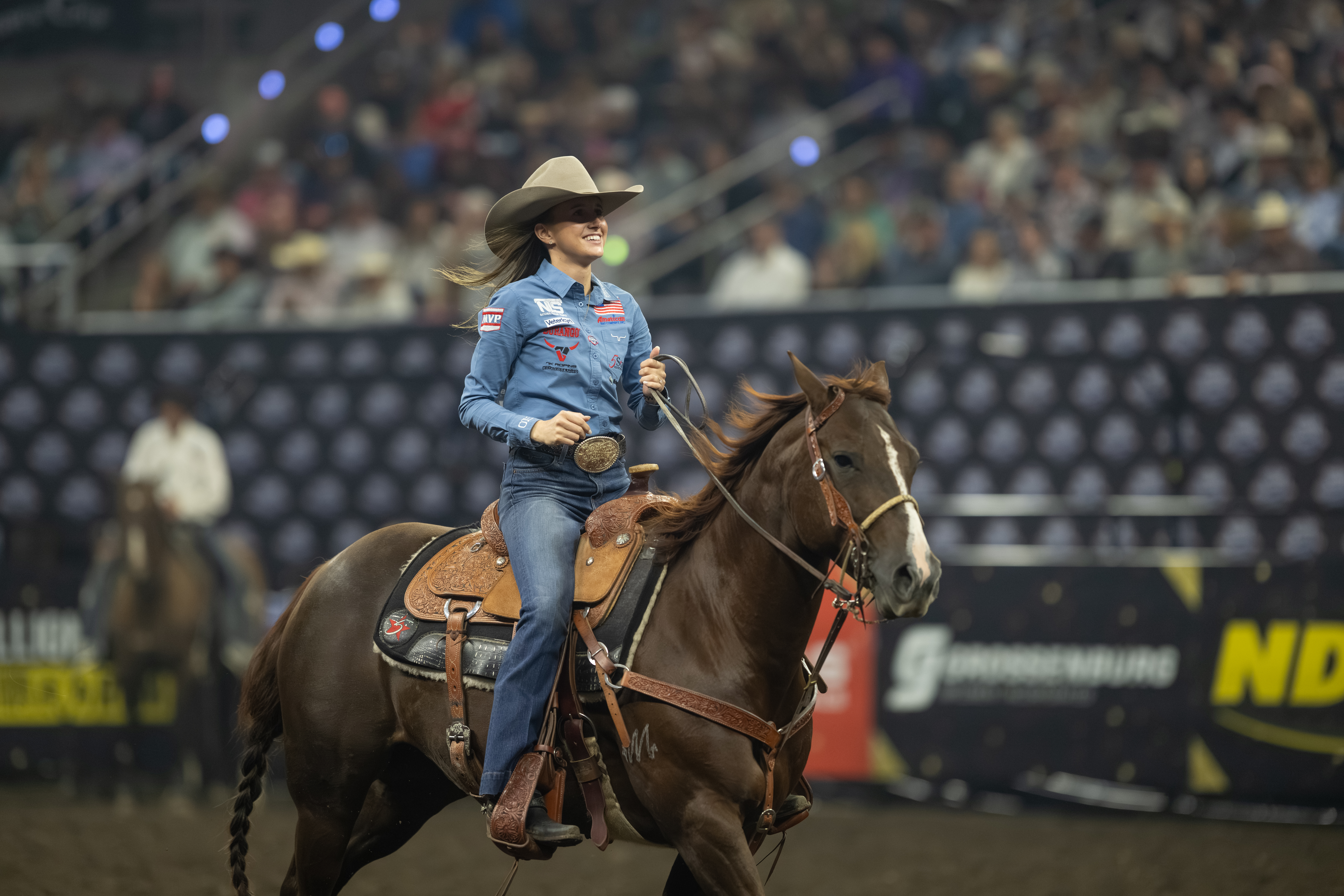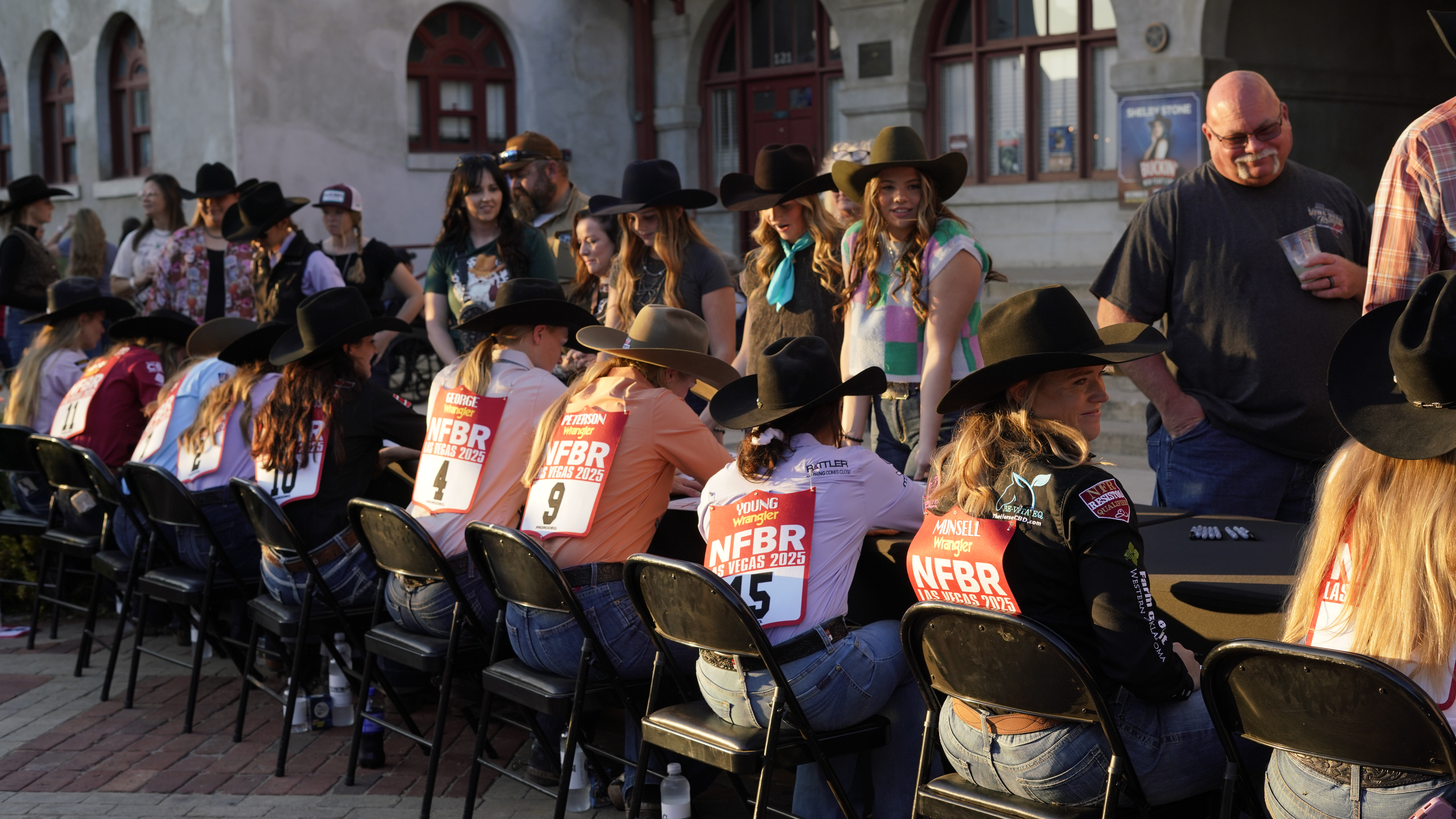
After a span at the South Point Arena in Las Vegas in December before the NFR, the National Finals Breakaway Roping—now rebranded the Wrangler WPRA National Breakaway Finals—will run December 18-19, 2026, at the newly remodeled Will Rogers Coliseum in Fort Worth, Texas.
The reaction across the top of the World Standings has been remarkably uniform: the ropers aren’t arguing about the zip code—they’re arguing for the purse. The move is a chance to continue pushing forward the fastest-growing event in ProRodeo, and to finally close a gap that has the World Champion winning less than a single go-round at the NFR pays the men.
No one framed that vision more directly than eight-time WPRA World Champion, Lari Dee Guy.
“In my opinion, breakaway roping needs to be at the Thomas and Mack with the rest of the events,” Guy said. “And until they can get it there and get the equal money, to me, Texas is the best place for it—and I feel that we can get equal money for it in Texas. By doing that, I think it’ll be hard to keep us out of the Thomas and Mack if we can pack the stands in Texas and get equal money.”
Jackie Crawford—the 2020 inaugural NFBR World Champion—echoed the same emphasis on the payout, even while saying the Vegas dream isn’t dead.
“I think it’s going to be fun,” said Crawford. “I think it’s going to be good. All of the things surrounding the move, like the ability to make the payout better, is a huge part of the excitement that I hope comes in Fort Worth.”
That sentiment, echoed in conversations with reigning World Champion Taylor Munsell, 2021 World Champion Sawyer Gilbert, and 5x NFBR qualifier Martha Angelone, frames the early reaction to a decision the WPRA called “a new chapter” for the finals.
A Quick History: Why Fort Worth Isn’t Actually New
It’s worth remembering that the NFBR was born in Texas. The inaugural National Finals Breakaway Roping ran Dec. 8–10, 2020 at Globe Life Field in Arlington—the same year the NFR temporarily relocated from Las Vegas because of the COVID-19 pandemic.
Six finals later, the event has been hosted in Las Vegas at the Orleans Arena and South Point Arenas and, most recently in 2025, at the Fort Worth Stockyards’ Cowtown Coliseum after an EHV-1 outbreak forced a last-minute move from Las Vegas. That 2025 contingency, by nearly every roper’s account, was a happy accident.
Common Thread #1: Vegas Was Set Up to Fail
The strongest agreement wasn’t about Fort Worth—it was about why Vegas never quite worked. The Finals ran in the days before the NFR began, which put the finals up against rodeo-committee meetings, junior back-number ceremonies, sponsor booth setup, and travel days for fans who weren’t yet in town.
” One of the things that I heard kind of commented was, ‘You guys can’t even sell out the South Point.’,” said Crawford. “And it is true. We definitely did not sell out the South Point. We had a great crowd, it was pretty full. But here’s the thing—when you set up your event to almost be a failure, in the sense of if you’re looking for crowd participation, you can’t have it in the front of a major expensive place that people go. You can’t have it before an event ever starts at one of the most expensive trips people are going to take throughout the year. When you put the Breakaway Finals where it had to be, in order to be in Vegas, days before the NFR starts, you’ve got people trying to set their booths up, you’ve got committee meetings so that committees couldn’t even come watch it when they wanted to. You’ve got youth events like the Johnsons put their mandatory back number ceremony over the top of the breakaway finals and you’re not allowed to miss it—you’re almost set up to not have a crowd.”
“With Vegas, the issue was just with it being days before the actual NFR starts,” said Munsell. “So, for anybody that planned on coming to Vegas, if they did want to watch the breakaway and watch a go-round at the NFR, they ended up having to be out there for several days. And then our finals were over the top of a bunch of the junior rodeo back-number ceremonies and a bunch of the rodeo committee meetings. So, we weren’t really set up to draw a crowd in Vegas.”
“When it was at Vegas, there was always other things going on,” Guy said. “It was hard to get all the fans that actually wanted to be there, there. The hustle and bustle of everything happening took away from the crowd.”
Both Crawford and Munsell pointed to the arena sellout in Fort Worth in 2025 as proof of concept.
“It was great to see how fast Fort Worth sold out when it’s set how it should be,” Crawford said. “To see the crowd that came out and were really, truly fans of breakaway was really cool in Fort Worth.”
“People really showed up for us down there last year, and I think that they’ll do it again this year.” Munsell said.
Gilbert took it further, arguing geography no longer dictates the audience.
“There’s lots of people in South Dakota and Nebraska that would drive down to Fort Worth for the weekend to watch the Breakaway Finals because it’s 12 or14 hours for them,” Gilbert said. “It’s a long-weekend vacation and they could watch something they enjoy watching. They’re not going to drive out to Vegas to watch the 45-minute concert that the Thomas & Mack does now. I can think of probably 20 people off the top of my head that would just come down and watch the breakaway finals.”
Common Thread #2: Yes, It’s About The Money
Every cowgirl we spoke with steered the conversation back to one topic: how much they’re actually competing for.
The math, frankly, is brutal. The 2025 NFBR paid roughly $6,000 per go-round and $17,000 for the average. That’s a structure some compared, unfavorably, to amateur association finals that require far less overhead to qualify.
“We rodeo all year long to go to the finals and shoot at $6,000 go-rounds,” said Angelone. “Half the rodeos we go to all year pay better than our finals do. I still UPRA and CPRA rodeo, and those finals have three rounds and an average and their rounds pay $3,200 a lot of times—that’s crazy to think that an amateur association that you wouldn’t have to leave your house for has a finals that pays at least half of what our pro rodeo finals do.”
“To be No. 15 in the world, you have no chance to win the world that year,” said Gilbert. “I understand that this year it’s not going to be the same payoff as the men at the Thomas & Mack, but we can maybe add something and then next year we can try to do something more, instead of just the same old thing and going for the trinkets.”
“Our biggest thing is we need to get more added money,” Munsell stressed. “We need to be roping for more money at our finals. That way there’s more than just three or five girls that come out of the finals winning enough money to make it worth it.”
The contrast Angelone drew between the men’s and women’s payouts at the NFR is the kind of detail fans rarely think about.
“The guys can go make a house payment or pay a house off or buy the rig they’ve been needing,” said Angelone. “For us, you can go have a badass finals and maybe have a down payment for a horse trailer—not even a good down payment. Even if we’re in the Thomas & Mack and only getting to rope for $6,000 a go-round, it’s still not the same.”
For reference, Rylee George led all 2025 NFBR earners with $25,212 out of the building—a sum the top NFR cowboys can clear in a single round.
Common Thread #3: Fort Worth Is the Bridge, Not the Destination
None of these ropers are giving up on Las Vegas, or on the dream of breakaway eventually rolling into the Thomas & Mack alongside the NFR. They simply see Fort Worth as the most direct path to making that future financially worth chasing.
“I feel like Fort Worth’s going to give us opportunity—I’m not saying $30,000 go-rounds—but I think they’ll help us gradually add the money to the finals,” said Angelone. “It doesn’t matter if it’s in Vegas, it’s in Florida, it’s wherever. The fans and the contestants are going to want to go where the money’s at.”
“Until they can get [breakaway] in the Thomas & Mack with equal money, Texas is the best place for it,” said Guy.
The Fort Worth Stock Show & Rodeo, for its part, has the receipts to back the partnership. FWSSR earned the 2020 WPRA Breakaway Trailblazer Year-End Award for being one of the first ProRodeos to feature women’s breakaway with equal money during its regular performances.
The Outliers: Opinions Outside the Numbers
Although the distinct overall opinion is just that the cowgirls want and deserve equal money, there were a few unique outlooks that deserve their moment.
Munsell, said her biggest gut-punch about leaving Vegas isn’t where they rope, it’s that the Finals now sits after the NFR, which means the breakaway world champion won’t share the championship stage at the Thomas & Mack with the rest of rodeo’s world titlists in Round 10.
“Winning the world, that was kind of the biggest letdown—not getting to be a part of that,” said Munsell. “I’ve heard from some of the other world champs that have gotten to do that, that it’s a surreal moment, and getting to be recognized on the same stage as the other world champions is awesome.”
Gilbert, who has added experience on the production side of the sport, questioned why the WPRA didn’t take the opportunity of a later, larger venue to add a day and reduce the punishing five-runs-a-day rotation that has defined the finals since 2020.
“It’s hard roping five calves in that situation a day,” said Gilbert. “Why did we not add a day if we’re going to have it a week later in Fort Worth? Why is it not three days or four days, or run two calves a day or three calves a day, instead of the five-a-day setup?”
She described the operational reality from her last Finals—finishing an interview while the arena is being raked, still tying her rope on as her name is being called, trying to remember whether the calf in the chute is her sixth or seventh run.
Angelone framed the issue around something most fans don’t see: the financial reality of qualifying.
“You rack up your credit card bills, which everybody’s different, but a lot of people have credit card debt and whenever we come home, we have to pay off,” said Angelone. “Half the time you go to the finals and you can’t even pay your credit card debt off.”
Crawford was careful not to oversell standalone events. A standalone breakaway finals, even a sellout one, is harder than a full rodeo to fill, she noted, but Fort Worth is rare in that it has a genuine, organic breakaway fan base.
“What brings the crowd is the entire rodeo together as a team, as a community,” said Crawford.
The Bigger Picture: The Equal-Money Argument Already Has the Receipts
The case for an equal—or at least a dramatically improved—NFBR purse doesn’t have to start from scratch. The numbers around ProRodeo breakaway have been on a tear, and the rodeos most willing to invest have been rewarded.
A few recent benchmarks worth keeping in mind:
- More than 500 ProRodeos added breakaway roping between 2019 and 2024, a roughly twenty-fold expansion of the discipline’s footprint inside the PRCA.
- Women bought 60% of rodeo and concert tickets and accounted for 63% of in-person attendance in 2024.
- The Top 20 ProRodeo breakaway earners cleared a combined $2.09 million in 2025, a ~37% jump from 2023—and the 20th-place check alone jumped from $47,068 to $64,703 over the same period.
- Cheyenne Frontier Days found $67,000 in 2021 to bring breakaway to equal money with every other event in The Daddy of ‘Em All. CEO Tom Hirsig’s reasoning was unsentimental: “Why not?”
- The Calgary Stampede added breakaway with a $310,250 equal-money purse in 2025, and the inaugural NFR Playoff in Puyallup, Washington wrote breakaway into a $1 million payout with equal added money.
- Rodeo Austin paid $52,000 in equal added money to its 2025 breakaway field.
- The PWR just paid $62k to each event winner at their finals at the Cowtown Coliseum.
In other words: when committees treat breakaway as a featured event, the crowds and the dollars follow. Fort Worth, which has been doing exactly that since 2020, is now being asked to prove the same thing again.
What’s Next
The WPRA has said additional details on contract terms, ticketing, and added money will be released in the coming weeks. Tickets and presale offers can be tracked at wpra.com/2026nbf.
For the women who’ll be backing into the box at Will Rogers Coliseum on Dec. 18–19, the message to the WPRA, FWSSR, and Wrangler is unified.
“I hope that everyone’s on board, and we can all just continue to work together to make it better for the future.” — Jackie Crawford