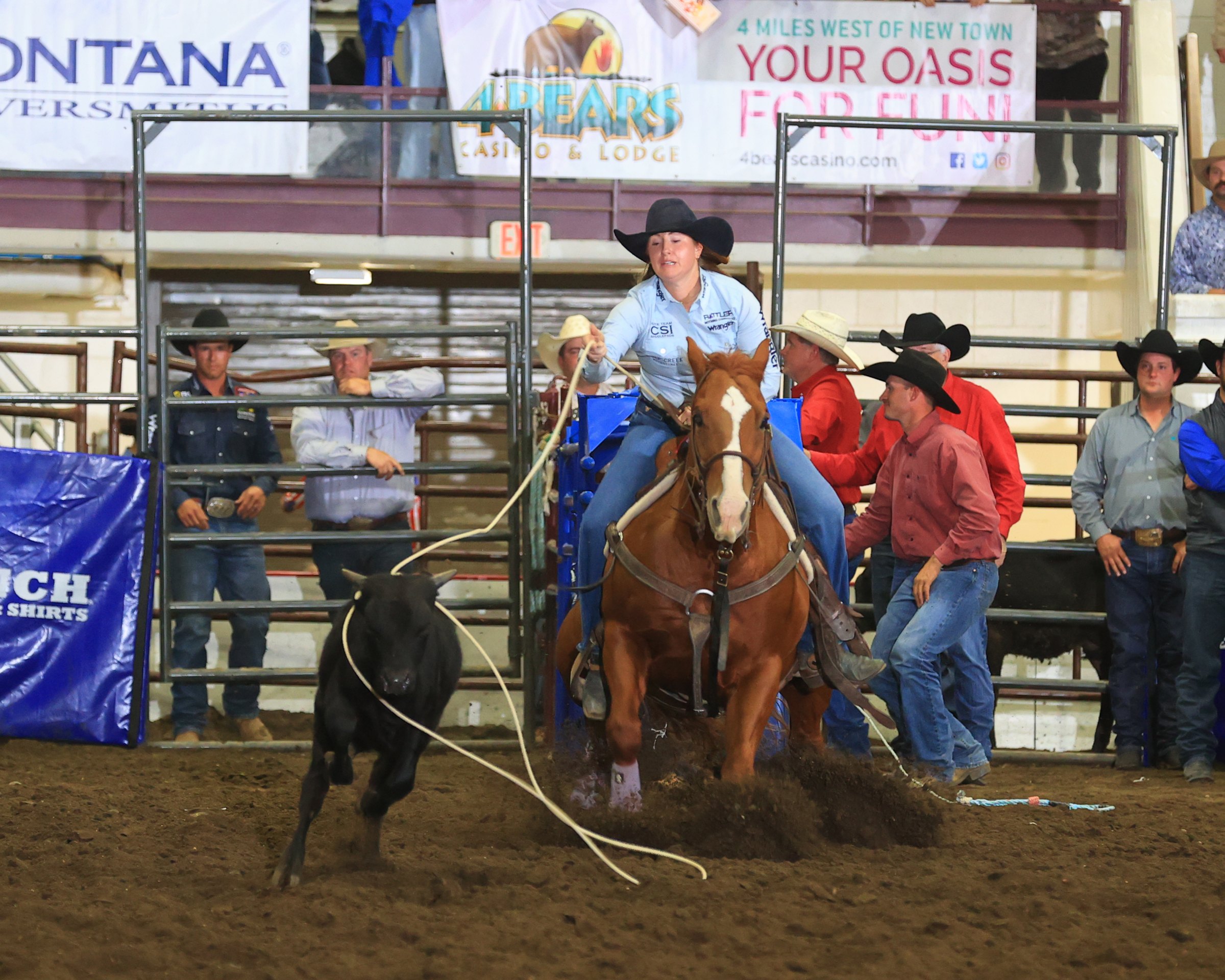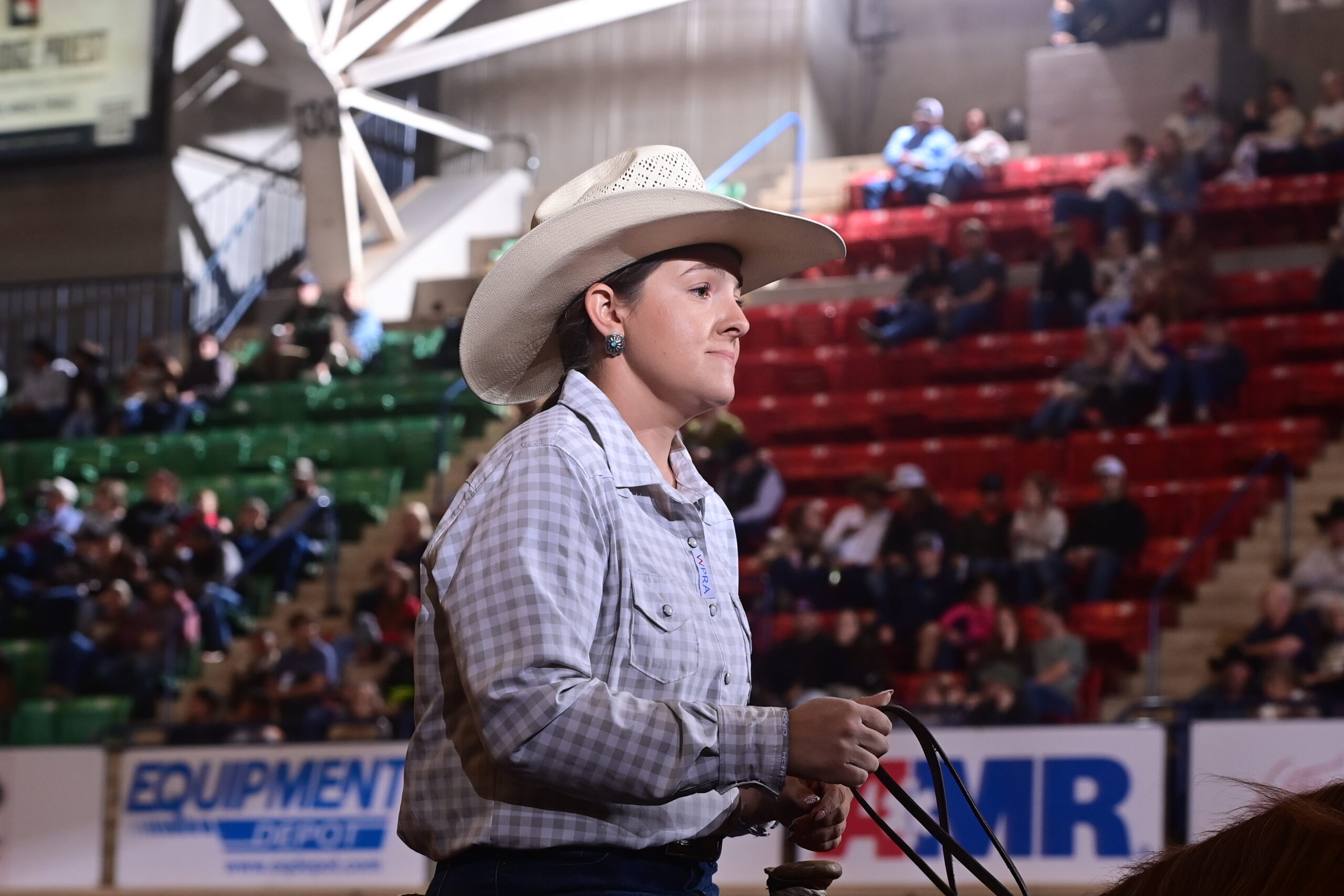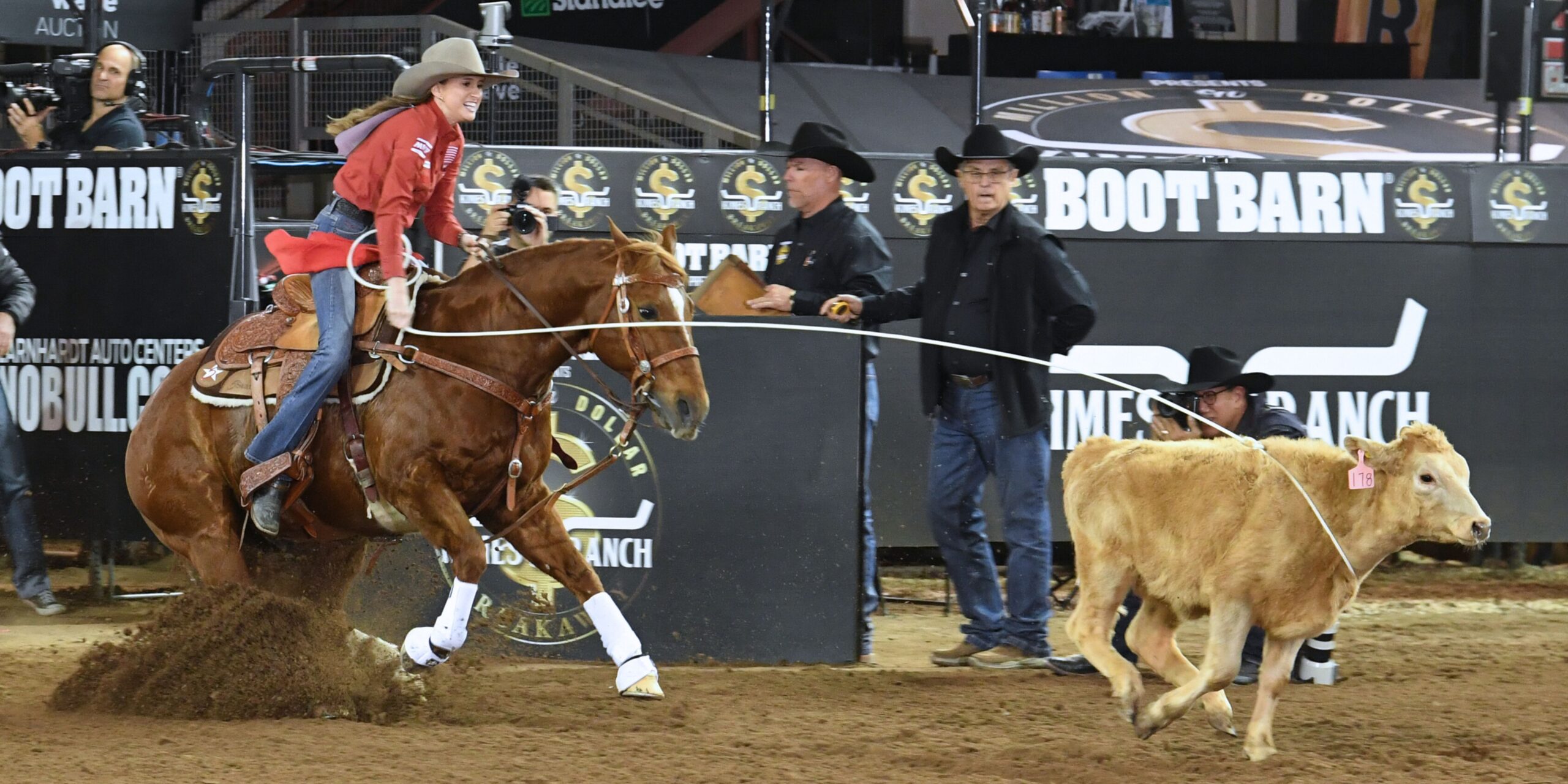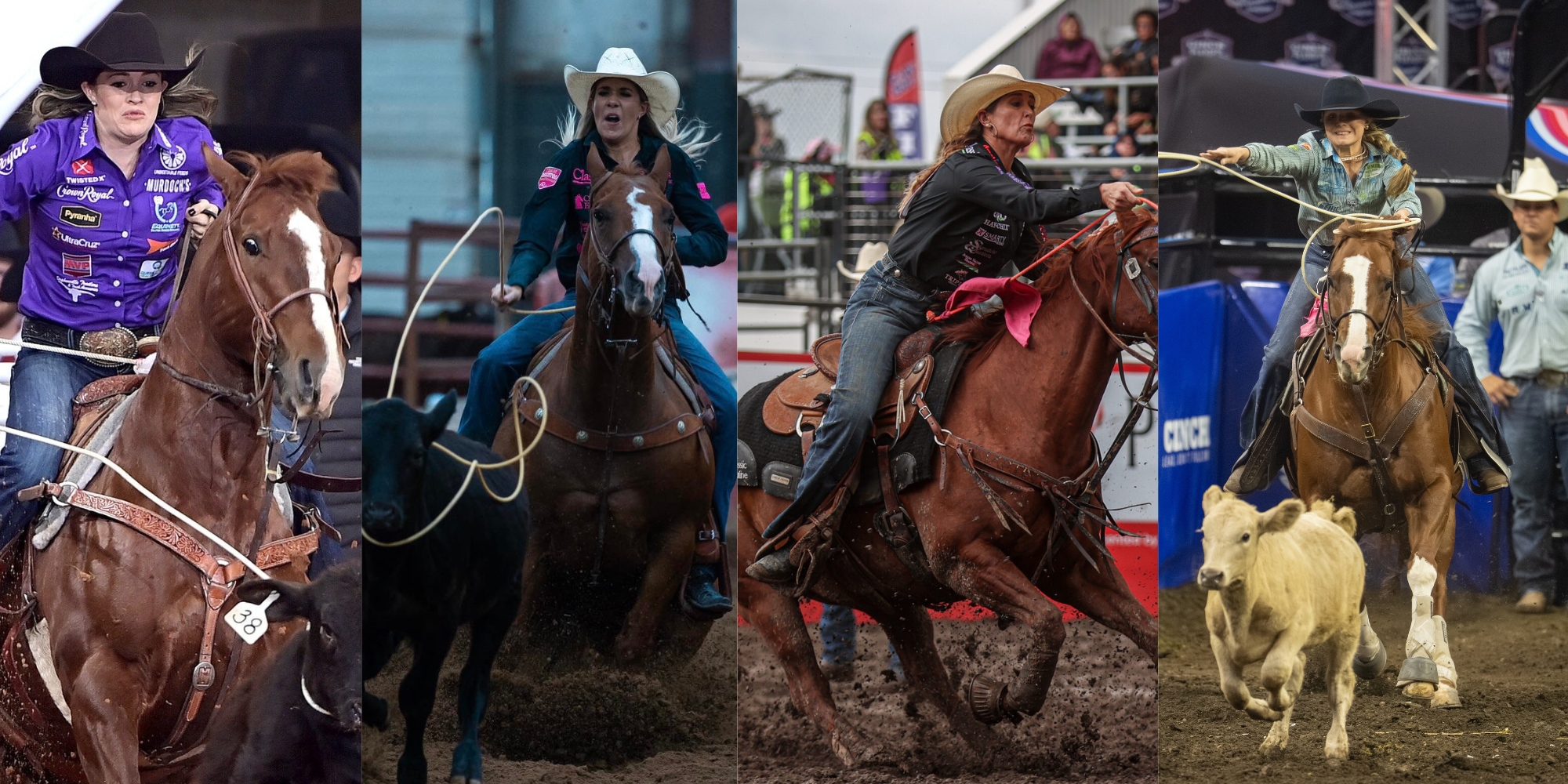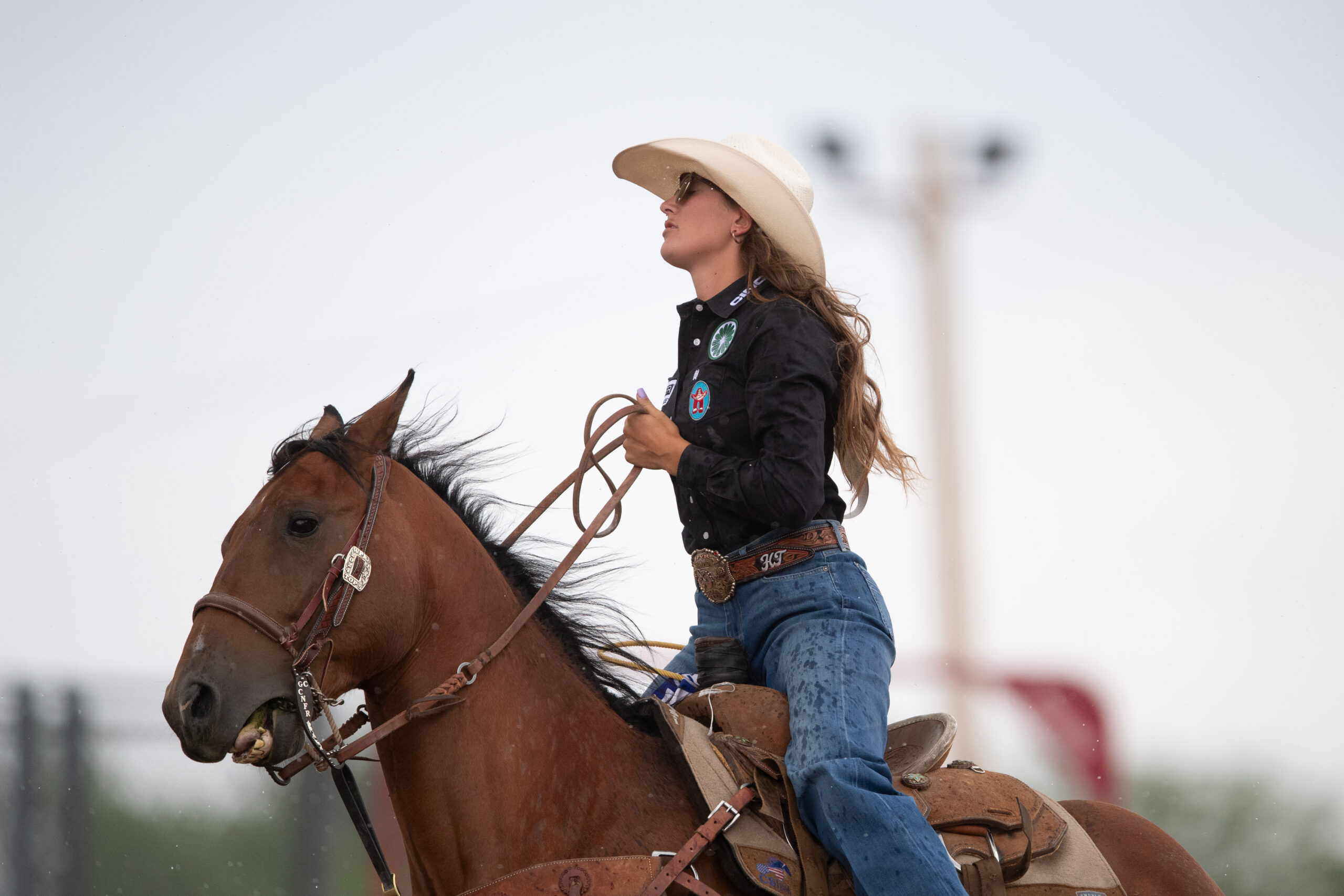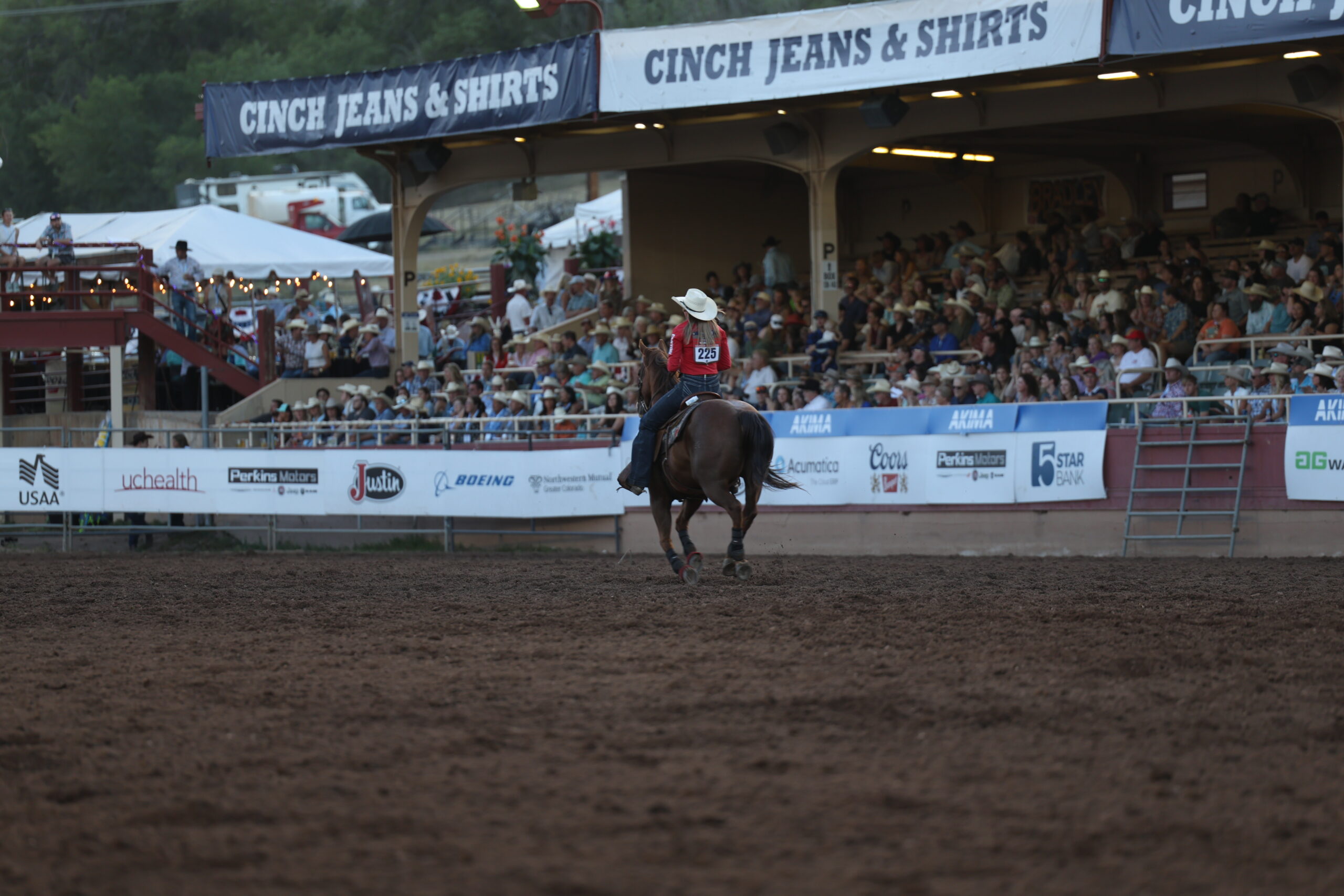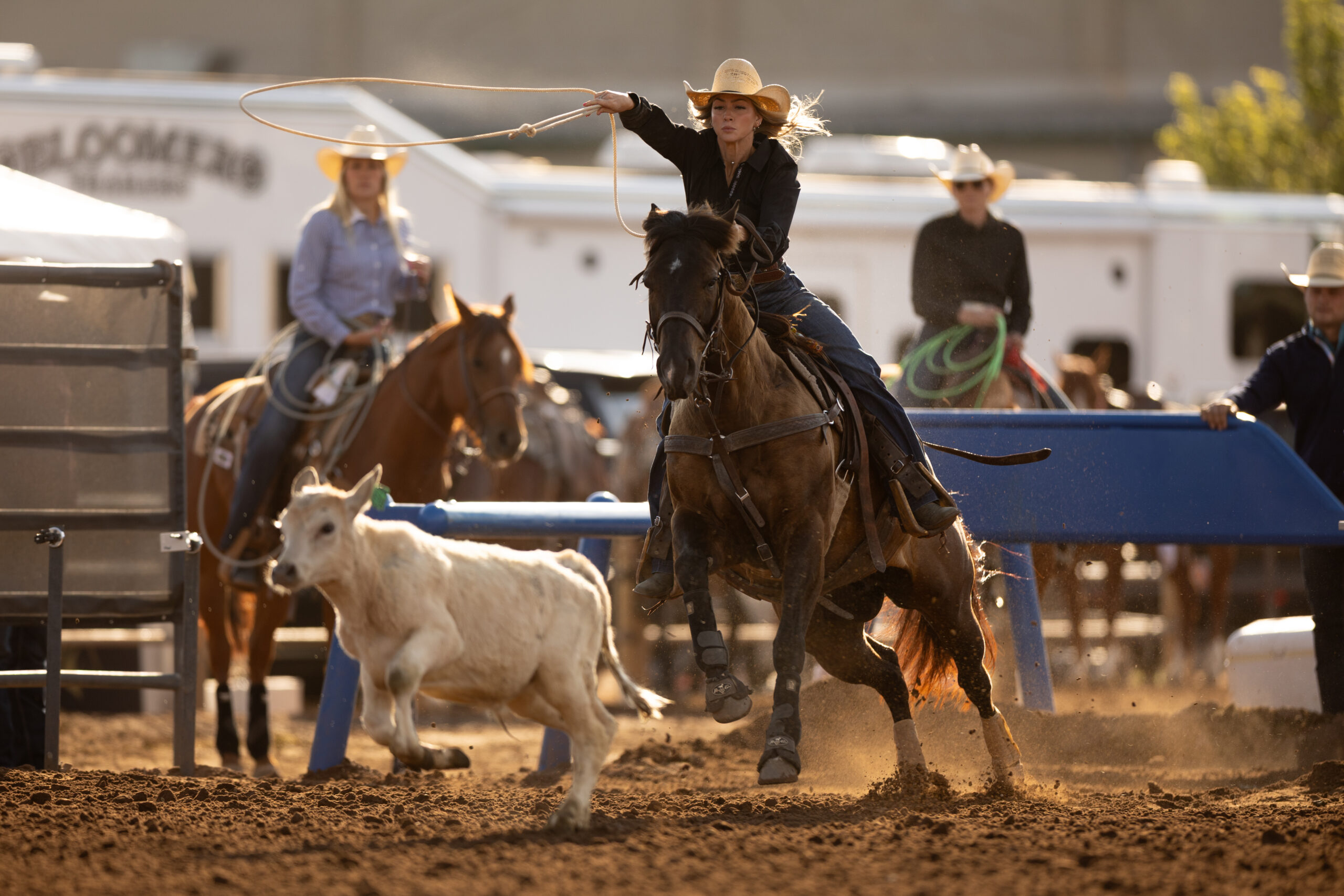
At just 4 years old, Major Trump is already putting up big scores in the breakaway roping futurity pen and holding his own on big ProRodeo stages, with Shalee Oftedahl handling nearly every step herself, from starting him in the roping to hauling him down the road.
Old West to Reno
Major Trump, who Oftedahl calls “Major,” backed that up at the Old West Futurity in Heber City, Utah, in the 4-&-under class: a 224.08 in Round 1, a Round 2 win with a 225.85 and a 225.67 in the finals.
A week later, she had him in Reno.
Oftedahl says Major is, right now, the best horse in her string.
“He’s super cowy,” Oftedahl said. “He’s got great timing and he’s just got a lot of natural ability. I think even right now he’s better than the two other rodeo horses that I have, because he has the timing that I haven’t felt on anything else.”
He’s not going to outrun a barrel horse, by Oftedahl’s own measure, but his stride is short and quick, and he’s fast getting to the calf. He’s also easy to be around: a big motor, but a controlled one, the kind of horse she doesn’t have to get the fresh off of before she can use him. He doesn’t even look the part.
“He looks like a pony,” Oftedahl said, with a heavy mane and tail and a short-bodied build that makes him look smaller than he is.
The Breeding
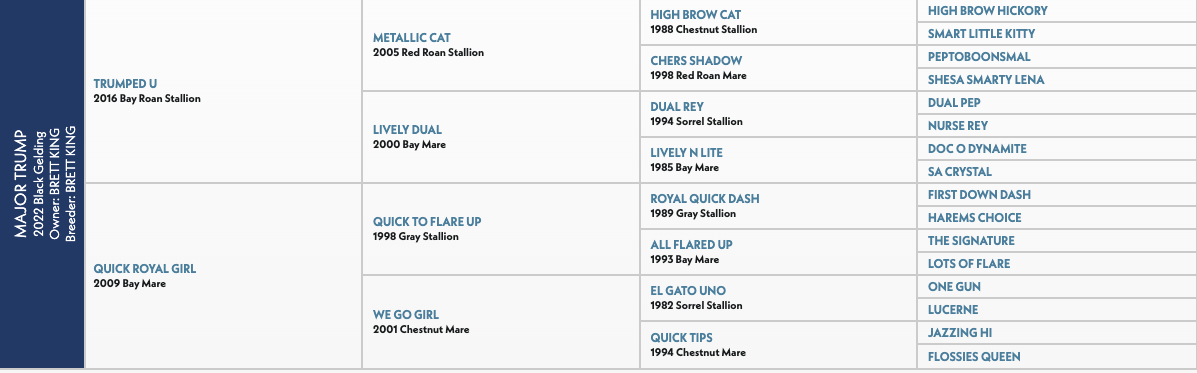
Major is a Trumped U gelding out of Quick Royal Girl, a barrel horse Oftedahl’s family has owned for years. Oftedahl wasn’t sold on breeding the mare when her parents decided to—not because they weren’t serious about it, but because of the mare’s attitude.
“I just don’t know why you’re breeding her,” Oftedahl remembers telling them. “Because she’s the one that will kick the crap out of the trailer and just be terrible.”
They bred her anyway. One of the mare’s first foals was Major Trump.
A Rough Start
Even getting him started took a detour. Major went to a reining trainer to break and spent about six months there. The trainer liked him fine, Oftedahl said, but wasn’t sold on his future in the discipline. So Oftedahl’s dad shipped him home to her with a simple assignment: see what he’s got.
It didn’t take long to get an answer.
“After about two weeks of riding him, I was like, I think this is probably the nicest horse on the road,” Oftedahl said.
The Cut That Could Have Ended It
That read almost didn’t get a chance to prove itself. Oftedahl planned to start hauling Major to jackpots last November; then the EHV outbreak hit. It had a lot of events on hold that winter, and it pushed her plans back too.
She finally got him to enter him a few times and by January, he was rolling.
Three days before the Fort Worth Stock Show, she was still debating whether to ride him instead of her stud but she never got the chance to decide. He cut his front left foot to the bone on a fence. Oftedahl watched it happen. The cut opened three joints. It was the kind of injury, she said, that could have ended his career, if not worse.
Major had surgery for the injury and was laid up for eight weeks, by late March he was rehabbing and starting to get back in the game.
Back on the Road
Oftedahl had planned to enter Major in the Roping Futurities of America (RFA) event—something she usually does. She’d started roping calves on him the previous summer with that goal in mind. Then he got hurt, and she couldn’t make it. He recovered in time for a stop in Mount Pleasant, Texas, where he pulled a check, and then out west they went for the Old West Futurities and Reno.
From there, Oftedahl kept him moving: Elko, Pecos and Oakley through the Cowboy Christmas swing. He was good everywhere—except Pecos. He’d scored so well at the Old West that Oftedahl expected the same in a longer setup, but he anticipated too much and showed his age. She’s not blaming the horse.
“That was just my fault, not really looking through everything and realizing what he did,” she said.
“He’s always just been the easiest. He does exactly what you ask. He’s easygoing.”