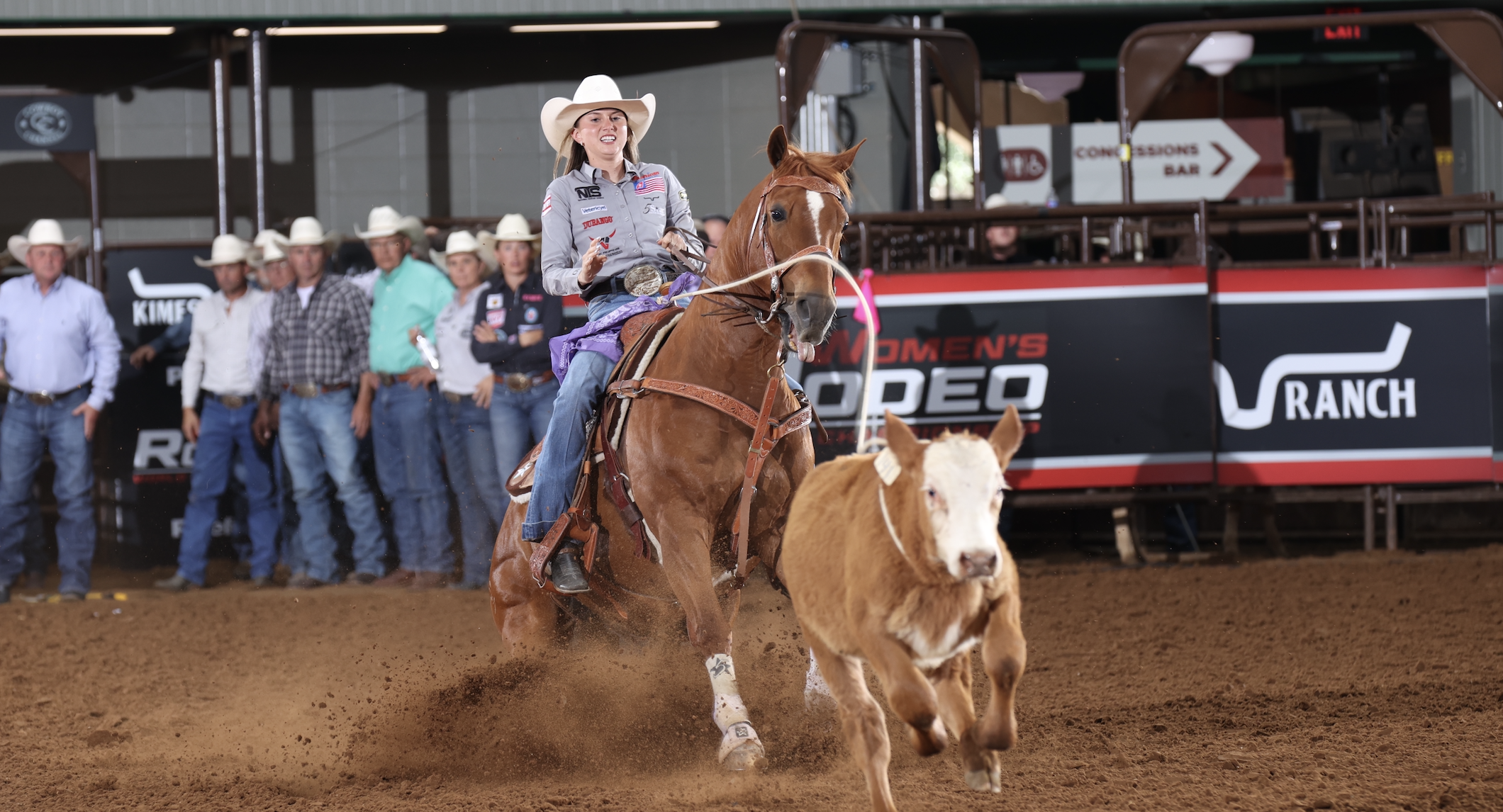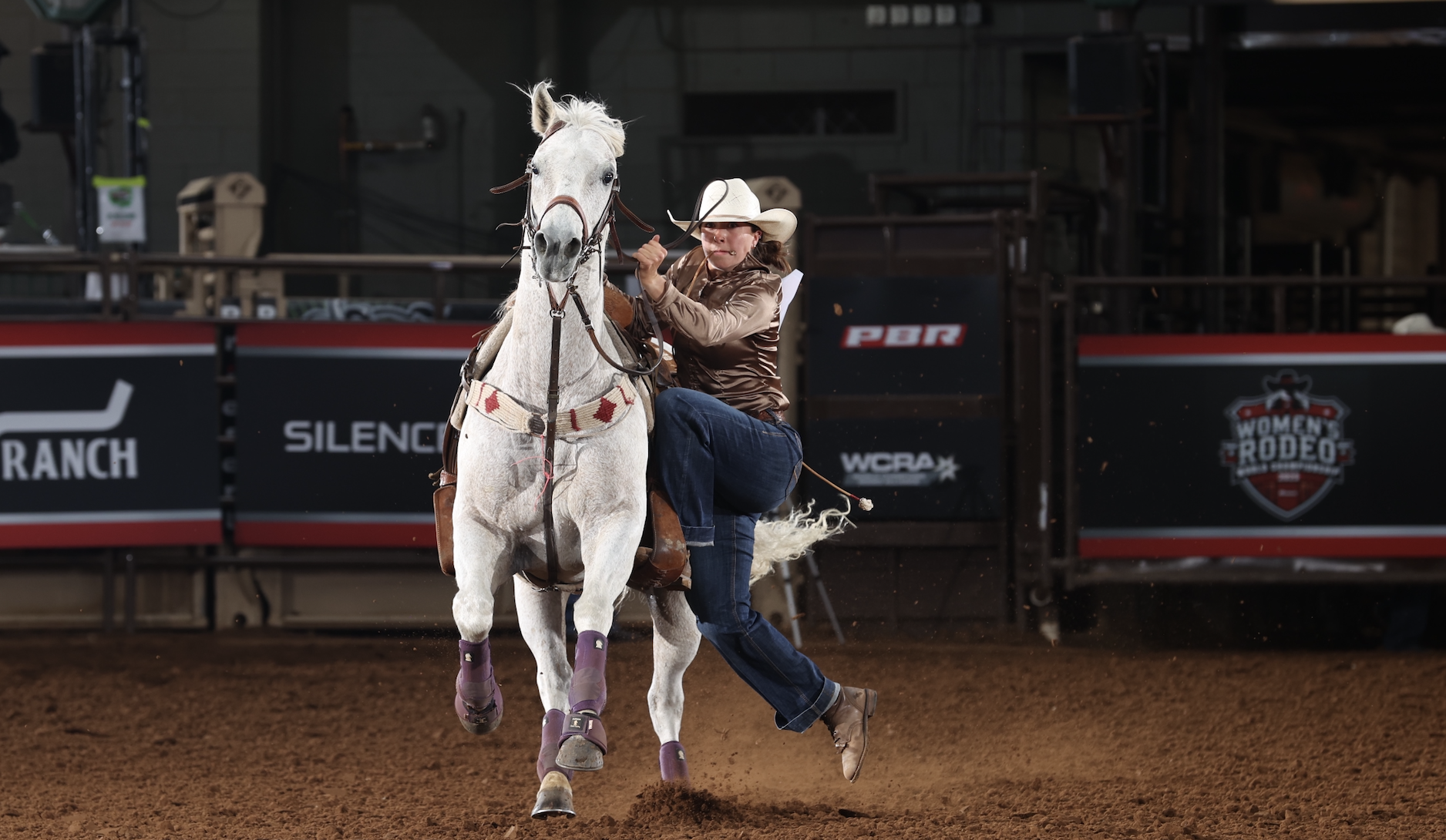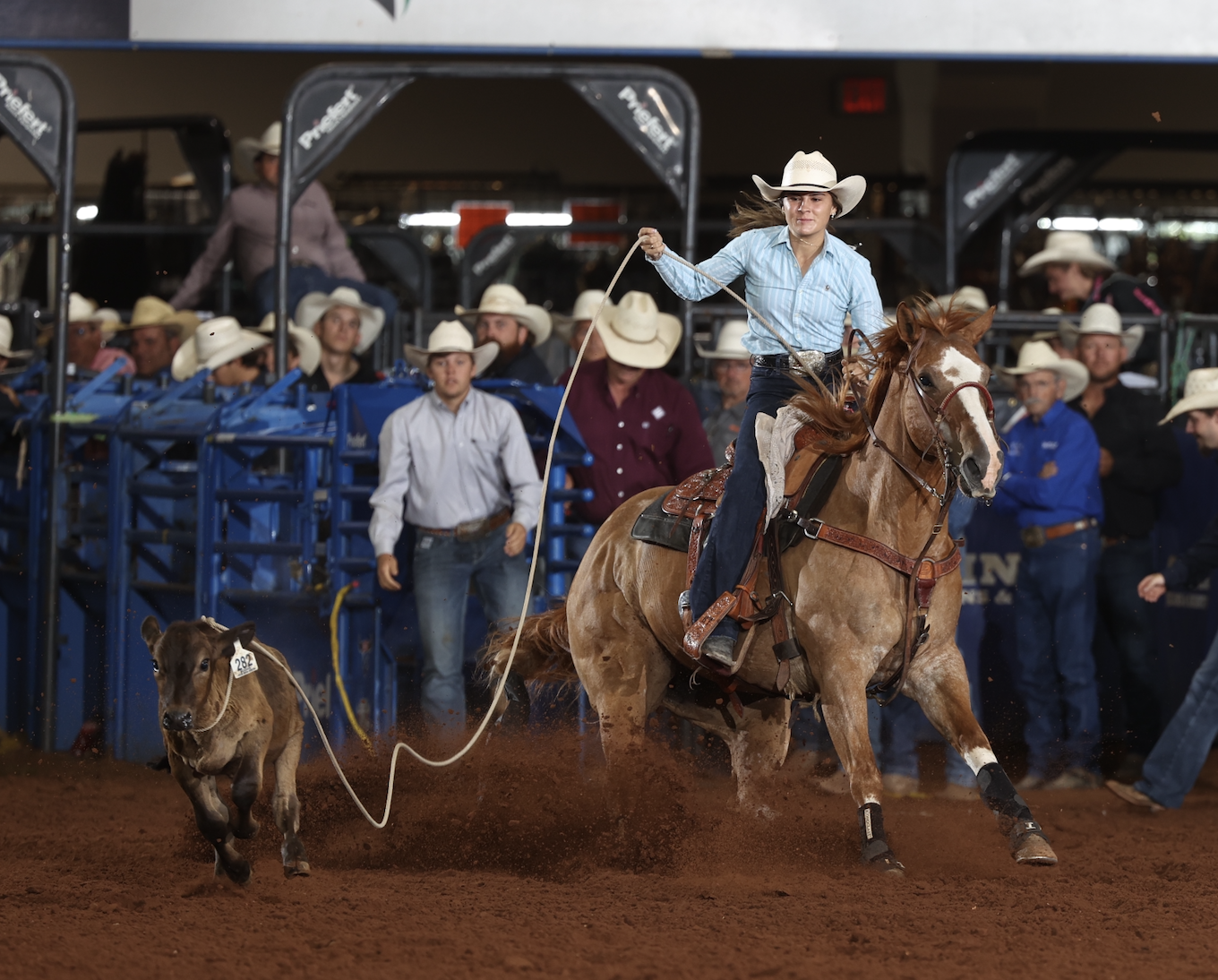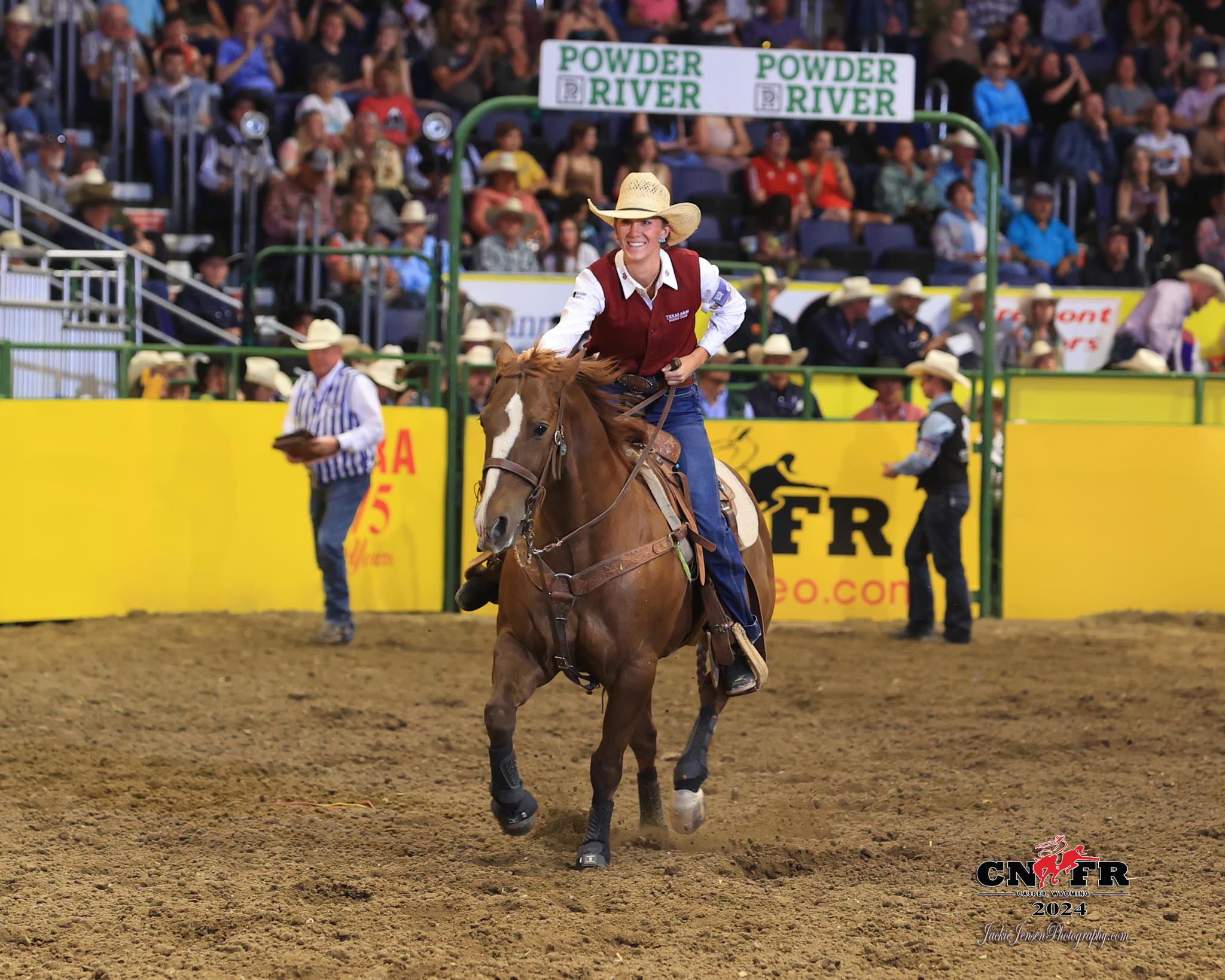
As young adults embark on the best four years of their lives as they head to college each fall, thousands of young rodeo athletes are also preparing for the next step in their budding careers: college rodeo.
Since 1949, the National Intercollegiate Rodeo Association has given college students the opportunity to develop their skills inside the arena while also furthering their education. With hopes of making the College National Finals Rodeo, college rodeo is an influential chapter for rodeo athletes prior to the professional level. But, new chapters can be intimidating. So, how does college rodeo work?
Table of contents
- So, what is college rodeo and NIRA?
- Regions? How does that work?
- Do all schools have college rodeo programs? What happens if mine doesn’t?
- Can I rodeo at a junior college?
- How do I become a NIRA member?
- Wait, we have to actually be…students?
- What’s this WCRA College Trifecta?
So, what is college rodeo and NIRA?
The National Intercollegiate Rodeo Association gives students enrolled in a college or university the opportunity to continue their rodeo careers after high school. With over with over 135 colleges and universities with sanctioned NIRA organizations and over 100 rodeos a year, NIRA continues to offer college athletes the opportunity to develop their rodeo careers while simultaneously furthering their education.
Students must be in good standing and meet specific academic requirements to be eligible to rodeo. A student has six years of eligibility from the date of high school graduation to compete in college rodeo with a limit of rodeoing four years, plus a fifth if pursuing a masters degree or serving as a student region director. Each member school has a coach or advisor to oversee practices, aid in the membership process, ensure students are eligible and help students through this chapter of school, rodeo and life.
Regions? How does that work?
NIRA is divided into 12 geographical regions across the United States. Each region has roughly 10 rodeos a year where athletes work to earn a trip to the College National Finals Rodeo, held in Casper, Wyoming, each June. Your college determines what region you will compete in. The region breakdown is as follows:
- Big Sky Region: Consists of colleges and universities in Montana and Northwest College in Powell, Wyoming.
- Central Plains Region: Consists of colleges and universities in Kansas, Oklahoma and the northwest corner of Missouri, west of I35.
- Central Rocky Mountain Region: Consists of colleges and universities in Wyoming, Colorado and Chadron State College in Chadron, Nebraska.
- Grand Canyon Region: Consists of colleges and universities in Arizona; New Mexico State University in Las Cruces, New Mexico; Mesalands Community College in Tucumcari, New Mexico; San Juan College in Farmington, New Mexico; Navajo Technical College in Crownpoint, New Mexico; New Mexico Highlands University in Las Vegas, New Mexico; Western New Mexico University in Silver City, New Mexicos; and ENMU – Ruidoso in Ruidoso, New Mexico.
- Great Plains Region: Consists of colleges and universities in North Dakota, South Dakota, Nebraska, Iowa, Minnesota and Wisconsin.
- Northwest Region Consists of colleges and universities in Oregon, Washington, the northern panhandle of Idaho (bound by the Salmon River to the south) and that part of Southern Idaho within the boundaries of Canyon County College of Idaho; Caldwell, Idaho; and Thompson Rivers University in Kamloops, British Columbia.
- Ozark Region: Consists of colleges and universities of Arkansas, the part of Louisiana north of the Red River and the Mississippi River, Missouri, Tennessee, Kentucky, Mississippi, Alabama, Michigan, Georgia, Indiana, Eastern Louisiana, Ohio and Illinois.
- Rocky Mountain Region: Consists of colleges and universities in Utah and Idaho (south of the Salmon River), Colorado Mesa University and Colorado Northwestern Community College.
- Southern Region: Consists of colleges and universities in East Texas (all member schools east of I35, Denton, Fort Worth, Waco, Austin, Uvalde and down Eagle Pass) and the part of Louisiana south of the Red River and the Mississippi River.
- Caprock Region: Consists of colleges and universities in Eastern New Mexico and the Panhandle region of Texas. astern New Mexico University (Portales); Clarendon (Texas) College; Frank Phillips College (Borger, Texas); Howard College (Big Spring, Texas); New Mexico Junior College (Hobbs); Odessa (Texas) College; South Plains College (Levelland, Texas); Texas Tech University (Lubbock); West Texas A&M University (Canyon); and Western Texas College (Snyder).
- Lone Star Region: Consists of Texas schools including Angelo State University; Cisco College, Ranger College; Sul Ross State University (Alpine); Tarleton State University (Stephenville); Vernon College; and Weatherford College.
- West Coast Region: Consists of colleges and universities in California and Nevada.
To see what specific schools are in each region, click HERE.
Do all schools have college rodeo programs? What happens if mine doesn’t?
No, not all schools have college rodeo programs–these are called non-member schools. Have no fear, though, you can still rodeo as an independent. To college rodeo at a non-member school, students need to become an independent member of NIRA by applying individually (if you are at a member school, typically your coach or program advisor will do this for you). For independents, you will typically be required to have your school administration sign and verify your status.
Can I rodeo at a junior college?
Absolutely! There are many junior colleges with NIRA programs (and successful ones, at that). As long as the school is accredited and in good standings, you’re good to rodeo.
How do I become a NIRA member?
To become a NIRA member, you must be enrolled in an accredited college. At the beginning of the school year, students will fill out a membership form and pay their dues, often with the help of their coach or advisor. Remember: If you are at a non-member school, you must fill out an independent membership form. Students must be eligible and in good standing to compete at their regional rodeos.
Wait, we have to actually be…students?
You sure do–that’s why it’s college rodeo. To be eligible, students must:
- Be enrolled at a college or university listed in the Accredited Institutions of Post Secondary Education publication
- Maintain a 2.0 GPA or higher
- Take at least 12 academic credits per term
- Be in good standing